You Won’t Believe What This Austrian City Hides—Architecture That Feels Alien
Linz, Austria, is not your typical postcard-perfect European city, but that’s exactly why it captivates. Instead of baroque facades, it throws futuristic curves, industrial grit, and bold artistic statements at you—perfect for the curious lens. I went looking for beauty in the unexpected, and found buildings that look like they’re from another planet. If you’re into photography that stands out, Linz’s architectural soul will blow your mind. This is a city that doesn’t hide its past; it builds upon it, layer by layer, creating a visual language that speaks of resilience, reinvention, and creative courage. For travelers seeking authenticity over ornamentation, Linz offers a rare clarity—a place where steel once defined strength, and now imagination does.
Reimagining a Post-Industrial Canvas
Linz’s architectural identity is deeply rooted in its transformation from a heavy industrial center to a hub of culture and innovation. Once known primarily for its vast steelworks, the city could have faded into obscurity as global manufacturing shifted. Instead, Linz chose reinvention. The remnants of its industrial past were not erased but reinterpreted—old factory sites now host art installations, cultural festivals, and design studios. This deliberate preservation of history within modern development gives Linz a distinctive visual rhythm, where rust and renewal coexist in harmony. The city planners understood early on that authenticity resonates more deeply than perfection, and this philosophy is evident in every repurposed warehouse and adaptive reuse project.
One of the most striking examples of this urban evolution can be seen along the northern banks of the Danube River, where towering cranes from decommissioned industrial plants stand as silent sentinels beside sleek glass-fronted galleries and contemporary performance spaces. These juxtapositions are not accidental; they are carefully curated to tell a story of progress without erasure. For photographers and visual storytellers, this creates an unparalleled opportunity to capture multiple eras within a single frame. A long exposure shot at twilight might show the warm glow of a modern tram gliding past a graffiti-covered brick wall, with the shadow of an old smokestack stretching across the pavement—a timeline made visible through light and shadow.
The city’s commitment to integrating industrial heritage into its cultural fabric is also reflected in public spaces such as the Design Campus, located in a former textile factory. Here, exposed steel beams and original machinery parts have been left intact, serving as both structural elements and artistic features. The raw textures of weathered metal, cracked concrete, and oxidized pipes provide rich visual material for close-up photography, while the expansive open floors invite wide-angle compositions that emphasize scale and spatial dynamics. Linz doesn’t treat its past as something to be hidden—it celebrates it as a foundation for creativity. This honesty in design makes the city feel grounded, even as its architecture reaches toward the future.
The Ars Electronica Center: Where Sci-Fi Becomes Reality
Rising from the Danube’s edge like a creature from another world, the Ars Electronica Center is Linz’s most iconic architectural statement. Often referred to as the "Media Church," its titanium-clad spherical dome appears to hover above the water, reflecting shifting patterns of light, sky, and movement. The building’s otherworldly presence is intentional—designed to provoke curiosity and symbolize the fusion of technology, art, and society. Its surface, composed of interlocking metallic panels, changes appearance throughout the day, appearing silvery and smooth in daylight and glowing with internal illumination after dark. For photographers, this structure offers endless possibilities for creative interpretation, especially during the transition between dusk and night.
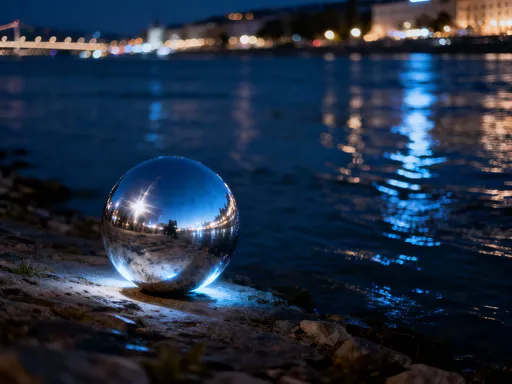
The true magic of the Ars Electronica Center lies in its responsiveness. The dome acts as a giant screen for dynamic light projections during festivals such as the annual Ars Electronica Festival, one of the world’s leading events for digital art and artificial intelligence. During these periods, the entire surface becomes a canvas for animated visuals, transforming the building into a living piece of performance art. Capturing these moments requires patience and timing—long exposures with a tripod allow the light trails and color shifts to blend into dreamlike compositions. Even on quiet nights, the reflective surface mirrors the rippling water below and the silhouettes of pedestrians walking along the promenade, creating natural framing opportunities that emphasize movement and transience.
Inside, the museum continues the theme of interactivity and immersion. Exhibits explore topics such as robotics, virtual reality, and bio-art, encouraging visitors to engage rather than simply observe. But for those focused on architectural photography, the exterior remains the primary attraction. Shooting from the southern bank of the river provides a full frontal view, with the dome framed by the flowing Danube and the city skyline behind. Alternatively, a low-angle shot from the adjacent plaza can exaggerate the structure’s imposing scale, making it appear almost gravitational in its pull. The Ars Electronica Center is not just a building—it’s a statement about the future of human expression, and one that demands to be seen through the lens.
Lentos Art Museum: Glass, Light, and Reflection
Stretching like a luminous ribbon along the Danube, the Lentos Art Museum is a masterclass in minimalist architecture. Completed in 2003, the building spans 5,400 square meters of glass and steel, elevated slightly above the riverbank on slender pillars. Its transparent façade allows natural light to flood the interior galleries while creating a striking visual effect from the outside—especially at sunrise and sunset, when the entire structure seems to ignite with golden or pinkish hues. At night, the museum transforms into a glowing prism, its mirrored surfaces reflecting the city lights and the gentle motion of the water beneath. For photographers, Lentos offers one of the most elegant subjects in Linz, combining symmetry, reflection, and fluidity in a single composition.
The best vantage point for capturing the full length of the museum is from the Nibelungen Bridge, which runs parallel to the river. From here, a wide-angle lens can encompass the entire façade, with the rippling water in the foreground adding depth and texture. Using a polarizing filter helps reduce glare on the glass, revealing the subtle details of the interior structure without overexposure. Early morning visits are ideal, as the soft, diffused light enhances the building’s ethereal quality and minimizes harsh shadows. The absence of crowds during these hours also allows for cleaner shots, free from distracting elements.
Inside, the museum houses a significant collection of modern and contemporary art, including works by Egon Schiele and international avant-garde artists. But even for those less focused on the exhibits, the interior architecture provides ample photographic interest. The high ceilings, polished concrete floors, and strategically placed skylights create dramatic contrasts between light and shadow, ideal for capturing architectural details such as stair railings, ceiling beams, and gallery partitions. The interplay of natural and artificial lighting changes throughout the day, offering new perspectives with each visit. Lentos is more than a museum—it’s a dialogue between art, environment, and structure, and a testament to how transparency can become a form of beauty.
Poststraße: Old Meets Bold in Urban Contrast
Just a short walk from the riverfront, Poststraße offers a compelling study in architectural evolution. This unassuming street embodies Linz’s philosophy of embracing change without erasing the past. On one side, 19th-century buildings with ornate cornices and pastel-colored façades stand quietly, their windows framed by flower boxes and wrought-iron railings. On the other, bold modern interventions rise with angular geometries, vibrant color panels, and unconventional materials. The contrast is not jarring—it is deliberate, even celebratory. Linz does not attempt to preserve its historic districts in amber; instead, it allows new architecture to engage in conversation with the old, creating a dynamic streetscape that feels alive and evolving.
For photographers, Poststraße is a treasure trove of compositional opportunities. A single frame can capture a weathered wooden door with peeling paint on a historic building, juxtaposed against a sharply defined, neon-lit staircase from a contemporary apartment complex. The play of light and shadow becomes especially pronounced in the late afternoon, when the sun casts long diagonal lines across the street, accentuating the textures of brick, stucco, and metal. Geometric balconies with angular supports create strong leading lines, guiding the viewer’s eye through the image. Capturing these moments requires attention to detail and an openness to spontaneity—sometimes the most powerful shots emerge from unplanned encounters, such as a cyclist passing under a colorful awning or steam rising from a sidewalk grate in winter.
What makes Poststraße particularly compelling is its authenticity. Unlike curated tourist districts where renovation often leads to homogenization, this street retains a sense of lived-in realism. Graffiti, temporary signage, and everyday wear and tear are not hidden but accepted as part of the urban fabric. This honesty adds depth to the visual narrative, reminding viewers that cities are not static displays but living organisms shaped by time, use, and community. Walking through Poststraße feels like reading a layered history book—one page classical, the next experimental, all part of the same story. For those who appreciate architecture as a reflection of societal values, this street offers profound insight.
The New Cathedral: A Monument to Scale and Silence
Soaring above Linz’s skyline, the New Cathedral (Neuer Dom) is one of the largest church interiors in Europe and a powerful example of 19th-century Gothic Revival architecture. Constructed between 1862 and 1924, the cathedral was designed to rival the great cathedrals of Germany and France, both in scale and spiritual presence. Its twin spires, reaching 134 meters into the sky, dominate the cityscape and are especially striking when illuminated at dusk. From a distance, the building appears traditional—its pointed arches, ribbed vaults, and stained-glass windows conforming to familiar ecclesiastical forms. Yet upon closer inspection, its interior reveals a surprising minimalism. Unlike the ornate excess of baroque churches, the New Cathedral embraces restraint, with clean stone surfaces, uncluttered spaces, and a focus on verticality that draws the eye upward.
This sense of quiet grandeur makes the New Cathedral a compelling subject for architectural photography. Wide-angle lenses are particularly effective inside, allowing photographers to capture the full height of the nave and the delicate tracery of the vaulted ceiling. The limited use of decorative elements creates a serene atmosphere, emphasizing space, light, and proportion. Natural light filters through tall stained-glass windows, casting colored patterns on the stone floor—these ephemeral moments are fleeting but unforgettable, best captured during midday when the sun is high enough to penetrate deeply into the interior. Externally, the cathedral’s massiveness contrasts with the more fluid, modern forms found elsewhere in the city, offering a powerful counterpoint in any architectural tour.
While the building is still an active place of worship, it also functions as a cultural landmark. Visitors are welcome during designated hours, and photography is permitted as long as it does not disrupt services. The surrounding plaza provides excellent vantage points for exterior shots, particularly from the northeast corner, where the full façade can be framed against the sky. The contrast between the cathedral’s solemn dignity and the vibrant energy of nearby public spaces—such as the Hauptplatz with its outdoor cafés and street performers—adds another layer of narrative depth. The New Cathedral is not a relic of the past but a living presence, anchoring Linz’s architectural dialogue between tradition and innovation.
Offbeat Gems: Hidden Structures Beyond the Center
To truly understand Linz’s architectural spirit, one must venture beyond the well-trodden paths of the city center. Neighborhoods such as Urfahr and the Güterstraße district reveal a different side of the city—one defined by grassroots creativity, adaptive reuse, and community-driven design. These areas are home to repurposed warehouses, experimental housing projects, and colorful cultural centers that reflect Linz’s ongoing commitment to urban innovation. Unlike the polished finishes of central landmarks, these spaces embrace rawness—peeling paint, corrugated metal, exposed wiring, and rooftop gardens that climb up weathered brick walls. For photographers seeking authenticity and texture, these offbeat locations offer some of the most compelling subjects in the city.
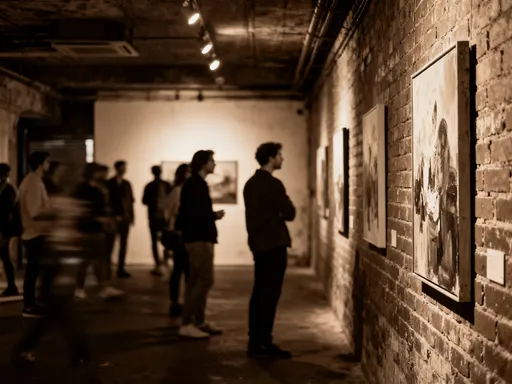
In Urfahr, a former postal sorting facility has been transformed into a hub for artist studios and independent galleries. The building’s industrial bones—steel trusses, concrete floors, and large loading docks—have been preserved, creating a rugged yet functional environment for creative work. The exterior walls are often used as canvases for murals, with new pieces appearing regularly through local art initiatives. Shooting here requires an eye for detail: a close-up of a rusted hinge next to a vibrant spray-painted flower, or a wide shot of the building’s façade with artists moving in and out through open bays. The interplay between decay and renewal is palpable, making every image feel layered with meaning.
Similarly, the Güterstraße area features a mix of social housing projects and experimental architecture, where sustainability and community engagement are central design principles. Some buildings incorporate green roofs, solar panels, and communal courtyards, reflecting a forward-thinking approach to urban living. The color palettes are often bold—bright blues, yellows, and reds—adding visual energy to otherwise utilitarian structures. These neighborhoods may not appear in glossy travel brochures, but they represent the true heart of Linz’s architectural transformation. They tell a story not of grand statements, but of quiet, persistent innovation rising from the ordinary. For photographers willing to explore, these hidden gems offer some of the most honest and moving images of the city.
Photographing Linz: Practical Tips for the Architecture Lover
Capturing Linz’s architectural diversity requires both preparation and openness to serendipity. The city rewards early risers—between 5 and 7 AM in summer, the light is soft, golden, and largely undisturbed by crowds. This is the ideal time to photograph major landmarks like Lentos and the Ars Electronica Center without distractions. A tripod is essential for long exposures, particularly along the Danube promenade, where water reflections and night lighting create dramatic effects. Using manual focus and low ISO settings helps maintain image clarity, especially in low-light conditions.
A wide-angle lens (between 16mm and 35mm) is indispensable for capturing the full scale of Linz’s most imposing structures, from the New Cathedral’s nave to the sweeping façade of Lentos. For detail shots—such as textured walls, geometric railings, or shadow patterns—a 50mm prime lens delivers excellent sharpness and depth. A polarizing filter can significantly reduce glare on glass surfaces, allowing photographers to see through reflective façades and capture interior elements without overexposure. Weather-resistant gear is advisable, as Linz’s riverside locations can be damp, especially in the early morning.
Public transportation in Linz is efficient and well-connected, making it easy to reach distant neighborhoods like Urfahr. However, the best discoveries often come from walking. Exploring side streets, alleyways, and quiet courtyards can lead to unexpected compositions—such as a burst of color from a community garden tucked behind an industrial wall or a perfectly framed reflection in a rain puddle. It’s important to respect private property and local regulations: drone photography is prohibited near religious sites, government buildings, and crowded public areas. Always seek permission before photographing individuals or private residences.
Finally, approach Linz not as a checklist of landmarks but as a living narrative. Let the city guide you. Some of the most powerful images emerge from moments of stillness—waiting for the right light, observing how people interact with spaces, or simply allowing yourself to get lost. Linz does not reveal itself all at once. It unfolds gradually, like the layers of its architecture, each one telling a story of resilience, creativity, and quiet transformation.
Linz doesn’t shout for attention, but it demands a second look. Its architecture refuses to conform, choosing dialogue over harmony. For photographers, this creates endless opportunities to capture contrast, texture, and meaning. In a world of repetitive skylines, Linz stands apart—not because it’s perfect, but because it’s real. Pick up your camera, wander without a map, and let the city surprise you.