You Won’t Believe What I Saw on the Serengeti Plains
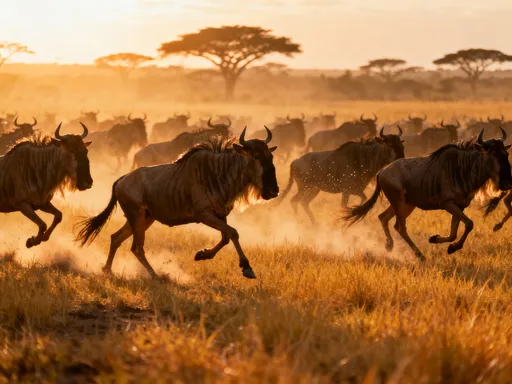
Standing in Masai Mara at dawn, I watched thousands of wildebeest thunder across golden grasslands—dust swirling, horns low, nature in full motion. This wasn’t just a safari; it was raw, untamed life unfolding before my eyes. The viewing experience here goes beyond wildlife spotting—it’s about feeling connected to something ancient and powerful. If you’ve ever wondered why Masai Mara tops so many travel dreams, this is where the answer begins. Few places on Earth offer such an immersive encounter with nature’s rhythms, where the horizon stretches endlessly and every rustle in the grass could signal the next great moment. This is not merely a destination. It is a transformation.
Arrival in the Wild: First Impressions of Masai Mara
The journey into Masai Mara begins long before the first lion sighting. It starts with a bumpy drive along red-dirt roads, where the scent of dry earth rises with each gust of wind. As the last signal bars fade from your phone, the modern world begins to recede. Suddenly, a figure in a bright red shuka—a traditional Maasai garment—waves from beside an acacia tree. Children run barefoot beside the vehicle, grinning, their voices carrying across the open plain. This is not a performance for tourists. It is daily life in one of Africa’s most iconic landscapes.
The transition is both physical and emotional. The landscape itself acts as a guide, shaping expectations before a single animal appears. Endless golden grasslands roll toward distant hills, broken only by clusters of umbrella-shaped acacia trees. The air is warm and carries the faint smell of sunbaked grass and woodsmoke from nearby camps. At this altitude, the light is sharp and clear, enhancing visibility across vast distances. Unlike dense forests or mountainous terrain, the open savannah of Masai Mara provides unobstructed sightlines, allowing visitors to scan the horizon for movement—a flicker of dust, a shadow in the tall grass.
Choosing the right entry point and timing significantly affects the quality of the experience. The main gate near Sekenani offers access to central zones where wildlife concentrations are consistently high. Arriving in the late afternoon allows travelers to settle in before sunrise game drives, which are widely considered the most productive. Seasonal variations also play a role: the dry months from July to October bring animals closer to water sources, increasing the chances of sightings. The shift from urban routine to wilderness immersion is profound. It is not just about seeing animals—it is about relearning how to observe, listen, and be present.
The Great Migration: Nature’s Greatest Show
No event on Earth rivals the scale and drama of the Great Migration. Each year, more than 1.5 million wildebeest, accompanied by hundreds of thousands of zebras and Thomson’s gazelles, follow a clockwise path between Tanzania’s Serengeti and Kenya’s Masai Mara. This cyclical movement is driven by the search for fresh grazing and water, a pattern shaped by centuries of ecological balance. The migration is not a single event but a continuous journey, with different stages visible at different times of year.
The most intense spectacle occurs between July and September, when herds converge at the Mara River. Here, the animals face one of their greatest challenges: crossing crocodile-infested waters. The banks become scenes of tension and courage. Wildebeest gather in large groups, hesitant at the edge, until one takes the plunge—triggering a cascade of movement. The river churns as thousands surge forward, hooves slipping on muddy banks, calves swept by currents. Nile crocodiles, some measuring over five meters, lie in wait, striking with lightning speed. The air fills with grunts, splashes, and the occasional cry of distress. It is chaotic, raw, and undeniably real.
Yet this event is not merely a display of survival. It is a cornerstone of the ecosystem. The migration fertilizes the soil, supports predator populations, and sustains scavengers. For visitors, witnessing this phenomenon transforms passive observation into emotional engagement. It is one thing to read about nature’s cycles; it is another to stand on the riverbank, feeling the ground tremble beneath thundering hooves. The experience fosters a deep respect for the resilience of life and the delicate balance that holds it together. Travelers often describe it as humbling—a reminder that humans are not the center of the natural world, but part of a much larger story.
Game Drives: Timing, Routes, and Wildlife Behavior
Game drives are the primary way most visitors experience Masai Mara, but not all drives are equal. Success depends on timing, route selection, and the expertise of the guide. Early morning drives, beginning just before sunrise, offer cooler temperatures and heightened animal activity. Predators such as lions and leopards are often still on the move, finishing night hunts or returning to shaded resting spots. The soft morning light also enhances photography, reducing harsh contrasts and capturing the golden glow of the savannah.
Evening drives, starting in the late afternoon, provide a different rhythm. As temperatures drop, herbivores return to grazing, and nocturnal species begin to emerge. This is also a prime time for cheetah sightings, as they take advantage of the cooling ground to hunt. The setting sun casts long shadows, creating dramatic silhouettes against the horizon. Both morning and evening drives avoid the midday heat, when many animals retreat to shade and movement slows.
Experienced guides play a crucial role in maximizing sightings. They understand animal behavior—knowing that a herd of elephants moving steadily may indicate a nearby water source, or that vultures circling overhead could signal a recent kill. They read the terrain, using elevated viewpoints to scan for distant movement. Communication among guides also helps; radio networks allow real-time updates on lion sightings or cheetah cubs playing in the open. However, responsible operators avoid overcrowding, ensuring that no single sighting becomes a traffic jam of vehicles.
Routes are chosen based on seasonal patterns and current wildlife concentrations. Areas near rivers and waterholes attract more animals during the dry season, while grasslands with recent rains draw grazers. Guides balance popular zones with quieter areas to offer both iconic sightings and moments of solitude. Ethical practices are non-negotiable: maintaining a safe distance from animals, avoiding off-road driving that damages vegetation, and minimizing noise to prevent disturbance. These principles ensure that the experience remains authentic and sustainable for future visitors.
Beyond the Big Five: Unexpected Encounters
The Big Five—lion, leopard, elephant, buffalo, and rhino—often dominate safari conversations, but focusing solely on them risks missing the richness of the ecosystem. Some of the most memorable moments come from quieter, less celebrated species. A bat-eared fox emerging at dusk, its enormous ears twitching as it listens for insects. A serval cat leaping high to catch a rodent in midair. A dung beetle rolling a perfectly formed ball across the dirt, following an invisible path known only to itself.
These small dramas unfold constantly, rewarding those who slow down and observe. One morning, a group watched a cheetah mother guide her three cubs through a patch of tall grass. She paused frequently, allowing them to practice stalking on grasshoppers and small lizards. It was not a kill, but it was essential—a lesson in survival passed from one generation to the next. Another afternoon, a troop of baboons navigated a rocky outcrop with surprising coordination, juveniles scrambling behind adults, infants clinging to their mothers’ backs.
Birdlife adds another layer of fascination. The martial eagle, one of Africa’s largest raptors, soars on thermal currents, scanning for prey. Ostriches, the world’s tallest birds, stride across the plains in pairs, their long legs covering ground with surprising speed. Even insects play vital roles: termites build towering mounds that become homes for reptiles and birds, while bees pollinate acacia blossoms, sustaining the cycle of growth.
Shifting focus from checklist tourism to mindful observation deepens the experience. It moves the visitor from spectator to participant in the story of the savannah. Instead of asking, “Have we seen a leopard yet?” the question becomes, “What is happening here, right now?” This awareness fosters connection, curiosity, and a greater appreciation for the complexity of life in the wild.
Cultural Connection: The Maasai Presence
The Maasai people are not just neighbors to Masai Mara—they are its stewards. For generations, they have lived in harmony with wildlife, their traditions shaped by the rhythms of the land. Visiting a Maasai boma—a circular compound of mud-walled huts surrounded by thorn fences—offers more than a cultural performance. When done respectfully, it provides insight into a way of life that values community, resilience, and environmental balance.
Elders share knowledge passed down through oral history: how to read animal tracks to determine species and direction, how to use stars to predict seasonal rains, and which plants hold medicinal properties. A Maasai guide once pointed out a small leaf used to treat stomach ailments, explaining that such remedies are still trusted within the community. These traditions are not relics of the past but living practices that contribute to conservation.
Women play a central role in boma life, managing households, crafting intricate beadwork, and teaching younger generations. Their jewelry, made from colored beads arranged in symbolic patterns, conveys identity, age, and social status. Visitors who engage in respectful dialogue often leave with a deeper understanding of how culture and conservation intersect. The Maasai do not see themselves as separate from nature; they are part of it.
Community-based tourism initiatives allow visitors to support local livelihoods directly. Some group ranches have established eco-camps where tourism revenue funds education, healthcare, and wildlife protection. These partnerships ensure that conservation benefits those who live alongside animals, reducing conflict and fostering cooperation. The cultural connection enriches the safari experience, transforming it from a visual tour into a multidimensional journey.
Choosing the Right Safari Operator and Camp
Not all safari experiences are created equal, and the choice of operator and accommodation can greatly influence the quality of the visit. Responsible operators prioritize sustainability, employ local guides, and support conservation efforts. Look for certifications from recognized bodies such as the Kenya Association of Tour Operators (KATO) or membership in eco-tourism networks. These indicators suggest a commitment to ethical practices and environmental stewardship.
Accommodation options range from permanent lodges to mobile tented camps. Permanent lodges offer amenities such as en-suite bathrooms, dining halls, and Wi-Fi, making them suitable for travelers seeking comfort. However, they are often located in fixed areas, which may limit proximity to seasonal wildlife movements. Mobile tented camps, on the other hand, relocate with the migration, placing guests closer to the action. These camps use lightweight, eco-friendly materials and leave minimal impact on the land.
Booking in advance is essential, especially for peak migration months. High demand means that quality operators and desirable camps fill up quickly—often a year in advance. Travelers should also consider group size. Smaller groups, limited to six to eight people per vehicle, allow for a more personalized experience and reduce environmental impact. Open-top 4x4 vehicles provide the best visibility and photo opportunities, while shared shuttles may compromise comfort and flexibility.
Family-friendly operators offer tailored experiences for multigenerational travel, including junior ranger programs and flexible meal times. Solo travelers can find curated group tours that foster connection while maintaining safety. The right choice depends on personal priorities—whether it’s luxury, authenticity, adventure, or education. What matters most is that the experience aligns with values of respect, responsibility, and wonder.
Preserving the View: Conservation and Responsible Tourism
Masai Mara faces growing challenges. Expanding human settlements, agricultural encroachment, and climate variability threaten wildlife corridors and grazing lands. Human-wildlife conflict increases when animals stray into farmland, leading to retaliation. Poaching, though reduced, remains a concern, particularly for elephants and rhinos. These pressures underscore the importance of conservation-minded tourism.
Real efforts are underway to protect the ecosystem. Wildlife corridors—designated pathways that allow animals to move safely between protected areas—are being secured through land leases and community agreements. Anti-poaching units, equipped with GPS tracking and drones, patrol vulnerable zones. Many camps have adopted solar power, water recycling, and waste reduction practices to minimize their footprint.
Travelers play a vital role. By choosing eco-conscious operators, respecting park rules, and supporting local communities, visitors contribute to long-term sustainability. Simple actions—staying in vehicles during game drives, avoiding plastic, and refraining from feeding animals—make a difference. Photography, when done ethically, can also raise awareness and inspire protection.
The best viewing experiences occur where nature is undisturbed. When animals behave naturally—hunting, grazing, raising young—the safari becomes authentic. Conservation is not a side note; it is the foundation of the experience. The plains thrive when visitors act as guardians, not just guests. Every responsible choice helps ensure that future generations will also stand in awe at dawn, watching wildebeest pour across the horizon.
Conclusion: Why the View Changes You
The true magic of Masai Mara is not measured in photos taken or species checked off a list. It is found in the quiet moments: the hush before sunrise, the distant call of a hyena, the way a lioness watches her cubs play in the dust. It is in the realization that you are witnessing a system older than civilization, one that continues to function with precision and grace.
This experience changes people. It instills humility, reminding us that we are part of a vast web of life, not its masters. It sparks awe, not just at the animals themselves, but at the intricate balance that sustains them. And it fosters a sense of belonging—not to a nation or a culture, but to the planet itself.
The Masai Mara does not exist for our entertainment. It exists because generations of people and animals have learned to coexist. Our role as visitors is not to dominate the experience, but to honor it. To seek depth over speed, presence over possession, and understanding over conquest. Let the wind carry the dust across your face. Let the silence speak. And when you return home, carry not just memories, but a renewed commitment to protect the wild places that still breathe, still move, still live.