You Won’t Believe These Hidden Natural Escapes in Rome
When you think of Rome, ancient ruins and bustling piazzas probably come to mind—but what if I told you the city hides stunning natural retreats? I was surprised too. Beyond the Colosseum and Vatican, Rome offers lush parks, serene gardens, and peaceful green oases. These spots are perfect for escaping the crowds and recharging. Let me take you through the city’s best-kept natural secrets—where tranquility meets timeless beauty.
Rome’s Green Heart: A Surprising Side of the Eternal City
Rome is often celebrated for its monumental architecture and rich historical legacy, yet few travelers realize how deeply green spaces are woven into the fabric of the city. While tourists flock to the Roman Forum and Trevi Fountain, locals know that Rome’s soul isn’t only in its stones—it also breathes in the rustling leaves of ancient trees and the quiet hush of hidden gardens. The Eternal City, for all its grandeur, is home to over 130 public parks and gardens, many of which have been cultivated for centuries. These natural pockets offer more than just shade and fresh air—they provide a vital counterbalance to the sensory overload of urban tourism. Experiencing Rome through its green spaces allows visitors to slow down, reflect, and engage with the city on a more intimate level.
The integration of nature into Rome’s urban landscape dates back to the Renaissance, when noble families began designing elaborate villas with expansive gardens. Over time, many of these private estates were opened to the public, transforming into beloved communal sanctuaries. Today, these spaces serve as living monuments to both nature and culture, where history isn’t just preserved in museums but grows alongside olive trees and climbing jasmine. From the manicured lawns of Villa Doria Pamphilj to the wilder trails of the Appian Way, Rome’s natural areas offer diverse experiences for every type of traveler—whether you’re seeking a quiet place to read, a scenic path for a morning walk, or a shaded spot for a family picnic.
What makes these green escapes so valuable is not just their beauty, but their ability to restore mental clarity. Studies have shown that spending time in nature reduces stress, improves focus, and enhances emotional well-being. In a city where every corner seems to demand attention, stepping into a quiet garden can feel like pressing pause. These spaces also provide exceptional opportunities for photography, away from the glare of tourist crowds. Imagine capturing the golden light filtering through cypress trees or the silhouette of an aqueduct against a twilight sky—images that convey the poetic side of Rome, often overlooked by guidebooks. By choosing to explore these natural retreats, travelers gain a deeper, more balanced understanding of the city—one that honors both its past and its present.
Villa Borghese: More Than Just a Park
Villa Borghese stands as Rome’s most celebrated green sanctuary, a sprawling 80-hectare park nestled on the Pincian Hill between Piazza del Popolo and Porta Pia. More than just a place to stroll, it is a cultural and recreational hub that blends art, history, and nature into a single harmonious experience. Designed in the early 17th century for Cardinal Scipione Borghese, the park was originally part of a private estate meant to showcase wealth and taste. Today, it belongs to the people, offering a peaceful refuge from the noise and pace of central Rome. Its winding pathways, shaded groves, and tranquil lake make it one of the most visited green spaces in the city—and for good reason.
Walking through Villa Borghese feels like stepping into a living painting. The park features formal gardens, romantic fountains, and open meadows where children fly kites and couples share quiet moments. At its heart lies the artificial lake, where visitors can rent paddle boats and glide across the water with views of the city skyline. Nearby, the Bioparco di Roma—the city’s historic zoo—offers a family-friendly attraction focused on conservation and education. While modest in size compared to modern zoos, it houses over 200 species and emphasizes natural habitats, making it a thoughtful stop for animal-loving visitors. The park also hosts several important museums, including the Galleria Borghese, home to masterpieces by Bernini, Caravaggio, and Raphael. This seamless blend of art and nature makes Villa Borghese unique among urban parks.
For those looking to make the most of their visit, timing and preparation are key. Early mornings and late afternoons are ideal, when sunlight casts a soft glow over the gardens and the crowds are thinner. Bicycles and electric scooters are available for rent near the main entrances, offering an efficient way to cover more ground. Guided walking tours provide historical context and point out hidden features, such as the Temple of Aesculapius by the lake or the charming Squirrel House tucked in the woods. Picnics are encouraged, and there are plenty of benches and grassy areas perfect for spreading out a blanket. Cafés and kiosks offer refreshments, though bringing your own snacks can enhance the sense of a personal retreat. Whether you spend an hour or a full afternoon here, Villa Borghese invites you to linger, breathe deeply, and appreciate the quieter rhythms of Roman life.
The Appian Way: Where Nature Meets Ancient History
Just a short distance from Rome’s city center lies one of its most evocative natural and historical corridors—the Appian Way, or Via Appia Antica. Built in 312 BCE as a vital military road, this ancient artery once connected Rome to southern Italy. Today, it is a protected archaeological park where nature has reclaimed the landscape in the most poetic way. Tall umbrella pines line the stone-paved road, their branches forming a canopy that filters the sunlight into dappled patterns on the ground. Wildflowers bloom in spring, and the air carries the scent of herbs and dry grass. It is a place where the past feels alive, not behind glass, but in the very soil beneath your feet.
Walking or cycling along the Appian Way is an experience unlike any other in Rome. The road stretches for miles through a semi-rural zone that feels worlds away from the urban core. Along the way, you’ll pass centuries-old tombs, crumbling aqueducts, and the remains of Roman villas, all half-buried in greenery. The silence is striking—broken only by the crunch of gravel underfoot, the distant call of a bird, or the soft rustle of leaves. This sensory immersion makes the Appian Way a favorite among photographers, historians, and nature lovers alike. For families, it offers a safe and scenic route for bike rides, while solo travelers often find it a perfect place for contemplation.
To fully enjoy this historic trail, visitors should focus on the most accessible and well-maintained sections, such as the stretch between Porta San Sebastiano and the Tomb of Cecilia Metella. This area is closed to regular traffic, making it ideal for walking and cycling. Bike rental shops near the starting point provide sturdy models suitable for the cobblestones, and guided tours—available in multiple languages—offer insights into the road’s engineering and significance. Comfortable footwear is essential, as the ancient basalt stones can be uneven. Sun protection is also advisable, as shade is limited in parts. While the full length of the Appian Way extends far beyond the city, even a two-hour visit provides a powerful sense of connection to Rome’s layered identity—where nature and history coexist in quiet harmony.
Orange Garden on the Aventine: A Secret with a View
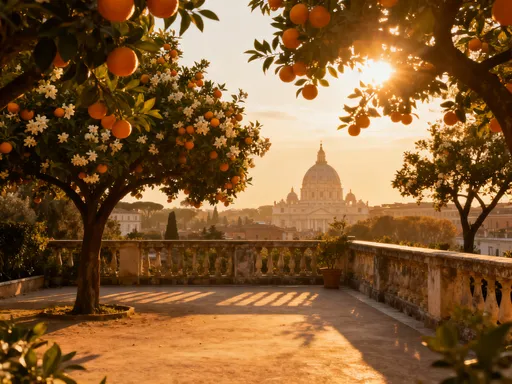
Tucked away on the Aventine Hill, the Giardino degli Aranci—Orange Garden—remains one of Rome’s best-kept secrets. Unlike the crowded viewpoints at the Spanish Steps or Piazza del Campidoglio, this small park offers an intimate and serene vantage point over the city. As its name suggests, the garden is planted with bitter orange trees, which bloom in spring, filling the air with a delicate, citrusy fragrance. The combination of scent, greenery, and panoramic views creates a multisensory experience that feels almost magical. From the terrace, visitors can see across the Tiber River to the dome of St. Peter’s Basilica, perfectly framed by the garden’s elegant balustrade.
What makes the Orange Garden so special is its atmosphere of quiet reverence. Benches are arranged to encourage stillness and reflection, and the low hum of the city below only enhances the sense of being in a private sanctuary. It is a favorite spot for locals at sunset, when the golden light bathes the dome in a warm glow. Photographers come to capture this iconic view, while couples and solo travelers alike use the space to unwind after a day of sightseeing. The garden also features a small fountain and a 12th-century church, Santa Sabina, just a short walk away, adding a touch of spiritual depth to the visit.
Access is simple and free, with entrances from both the Aventine residential streets and the nearby Circo Massimo metro station. Because it is less known to mass tourism, the garden rarely feels crowded, even in peak season. Visiting in the late afternoon allows you to experience both daylight views and the soft illumination of the city as evening begins. There are no food vendors on-site, so bringing a light snack or a thermos of tea can make the experience even more personal. The Orange Garden is not a place to rush through—it is meant to be savored, a quiet pause in the rhythm of a busy trip. In a city full of grand gestures, this small garden speaks in whispers, offering beauty without spectacle.
The Aqueduct Park: Urban Wilderness at Its Finest
For a truly unique blend of nature and ancient engineering, Parco degli Acquedotti—Aqueduct Park—stands apart. Located in the southeastern part of Rome, this expansive green area is dominated by the towering remains of Roman aqueducts that once supplied water to the city. The most striking is the Aqua Claudia, its massive arches rising over fields of wild grasses, poppies, and olive trees. Unlike the manicured gardens of central Rome, this park feels untamed, almost rural, despite being within the city limits. It is a place where history doesn’t just stand still—it merges with the landscape, creating a surreal and photogenic environment.
The park covers over 240 hectares and is a popular destination for joggers, cyclists, and dog walkers. Its wide dirt paths make it ideal for long walks or bike rides, and the open sky offers a refreshing contrast to Rome’s narrow streets. In spring and early summer, the fields burst with color as wildflowers bloom, attracting butterflies and bees. The sound of birdsong replaces city noise, and the only shadows are cast by centuries-old stone arches. It is easy to imagine yourself in the Roman countryside, yet you are just a metro ride away from the Colosseum.
Getting to the park requires a bit more planning than other attractions. The closest public transport is the Metropolitana Line A, with stops at Giulio Agricola or Lucio Sestio, followed by a 15-minute walk. Taxis and ride-sharing services can take you directly to the main entrance. While the park is generally safe and well-used by locals, it is advisable to visit during daylight hours and stay on marked paths. There are no restrooms or food services, so bringing water and snacks is recommended. Because of its size, it’s easy to find a secluded spot to sit and reflect. Photographers will appreciate the dramatic interplay of light and shadow on the aqueducts, especially in the early morning or late afternoon. Parco degli Acquedotti is not just a park—it is a living landscape where nature reclaims history, inviting visitors to see Rome from a completely different perspective.
Practical Tips for Exploring Rome’s Natural Areas
Exploring Rome’s green spaces is rewarding, but a little preparation goes a long way. The best times to visit are spring (April to June) and early autumn (September to October), when temperatures are mild and the gardens are in full bloom. Summers can be hot and dry, so early morning or late afternoon visits are recommended, especially for open areas like the Appian Way or Aqueduct Park. Comfortable walking shoes are essential—many paths are made of uneven stone or gravel, and high heels are impractical. Sun protection, including hats, sunglasses, and sunscreen, should not be overlooked, as shade can be limited in certain parks.
Staying hydrated is important, particularly during warmer months. While some parks have drinking fountains—known locally as “nasoni”—it’s wise to carry a reusable water bottle. Picnicking is a beloved Roman tradition, and most parks welcome it as long as visitors clean up afterward. Simple foods like fresh fruit, bread, cheese, and wine make for an authentic and enjoyable outdoor meal. Many travelers combine visits to natural areas with nearby cultural sites—pairing Villa Borghese with the Galleria Borghese, or the Appian Way with the Catacombs of San Callisto—to create balanced itineraries.
Navigating to these locations is straightforward with public transportation. Rome’s metro, buses, and regional trains connect most major parks to the city center. The ATAC app provides real-time schedules and route planning, while Google Maps works reliably for walking and transit directions. For those renting bikes, check that helmets and lights are included, and always follow local traffic rules. Above all, respect the environment and local customs: avoid loud noises, do not pick plants or disturb wildlife, and dispose of trash properly. Sustainable tourism ensures these spaces remain beautiful for future generations. By traveling mindfully, visitors honor both Rome’s heritage and its living landscapes.
Why Nature Matters in a City of History
In a city defined by its monuments, nature offers something equally profound—a sense of balance. The Colosseum and the Pantheon inspire awe, but a quiet garden or a tree-lined avenue restores the spirit. Rome’s green spaces are not distractions from the historical experience; they are essential complements. They remind us that even in the heart of an ancient empire, life has always depended on harmony with the natural world. The same engineers who built aqueducts also designed gardens; the same artists who painted frescoes found inspiration in flowing water and blooming flowers. To ignore Rome’s nature is to see only half the story.
Spending time in these natural retreats changes the pace of travel. It encourages observation over checklist tourism—inviting you to notice the way light falls on a stone wall, the sound of wind through pine needles, or the scent of jasmine after rain. These moments of stillness deepen your connection to the place, transforming sightseeing into a more meaningful experience. For families, these spaces offer room to play and breathe; for solo travelers, they provide solitude and clarity. In every season, Rome’s parks and gardens reflect the passage of time in their own quiet way—through budding leaves, falling petals, or the golden hue of autumn grass.
Ultimately, discovering Rome’s natural escapes is about finding the city’s soul. It is not only in the grandeur of its ruins but also in the whisper of its trees and the stillness of its gardens. These places teach us to slow down, to be present, and to appreciate beauty in its simplest forms. As you plan your journey, consider making space for quiet walks, unplanned detours, and moments of pause. Let the city surprise you—not just with its history, but with its quiet, enduring green heart. Go ahead: step off the beaten path, breathe deeply, and discover the Rome that few tourists ever see.