You Won’t Believe What São Paulo’s Skyline Just Revealed
São Paulo isn’t just Brazil’s beating urban heart—it’s a cityscape that defies expectations. I never thought concrete and steel could feel so alive until I stood beneath its jungle of skyscrapers, where art crawls up buildings and light dances across glass at golden hour. This is urban chaos turned poetry, a metropolis that blends grit and grandeur in ways you have to see to believe. More than a financial hub or a transit stop, São Paulo reveals itself slowly, layer by layer, as a city where vertical ambition meets human warmth. Its skyline is not just a collection of towers—it’s a living narrative of resilience, creativity, and cultural fusion that unfolds from dawn to dusk and long into the night.
The First Glimpse: Arriving in São Paulo After Dark
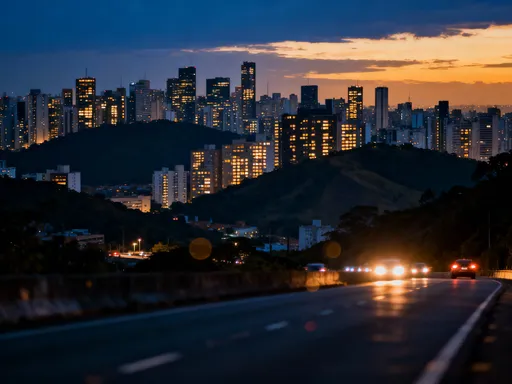
For many travelers, the first encounter with São Paulo comes after sunset, as the car descends from the elevated highways that crisscross the city’s sprawling perimeter. From this vantage, the skyline emerges like a constellation spilled across rolling hills—thousands of golden and white lights flicker in rhythmic clusters, tracing the contours of neighborhoods that stretch farther than the eye can follow. There is no grand monument marking the city’s entrance, no single iconic tower that announces its presence. Instead, São Paulo reveals itself gradually, a vast urban organism humming with energy, where the glow of office towers, apartment windows, and streetlamps merge into a luminous tapestry.
This initial impression often contrasts sharply with the preconceptions many carry. São Paulo has long been labeled as overwhelming, congested, even intimidating—a city more associated with business suits and rush-hour traffic than with beauty or wonder. Yet, in the quiet stillness of a nighttime arrival, those assumptions begin to dissolve. The scale is undeniably immense, but there is a strange comfort in the sheer continuity of light, a sense that within this vastness, life is unfolding in countless intimate ways. A mother tucking in her child, a chef preparing dinner in a high-rise kitchen, a night guard making his rounds—each light represents a story, a home, a moment of ordinary life elevated by the city’s grandeur.
What makes this first glimpse so transformative is not just the visual spectacle, but the emotional shift it triggers. The apprehension that often precedes a visit to such a large, complex city begins to give way to awe. Travelers realize they are not entering a cold, impersonal metropolis, but a place pulsing with rhythm and purpose. The skyline, seen from the highway, becomes a threshold—a gateway into a deeper understanding of urban life in one of South America’s most dynamic capitals. It sets the stage for a journey that is less about ticking off landmarks and more about feeling the pulse of a city that refuses to be simplified.
Vertical Jungle: Understanding the Architecture of a Megacity
São Paulo’s skyline is not the product of a single era or vision, but the cumulative result of over a century of growth, ambition, and adaptation. Walking through its central districts is like flipping through the pages of an architectural encyclopedia, where colonial facades stand shoulder to shoulder with Art Deco gems, brutalist monoliths, and glass-clad skyscrapers that seem to scrape the clouds. This eclectic mix is not accidental—it reflects the city’s evolution from a regional trade hub into a global economic powerhouse, where every generation has left its mark in brick, steel, and concrete.
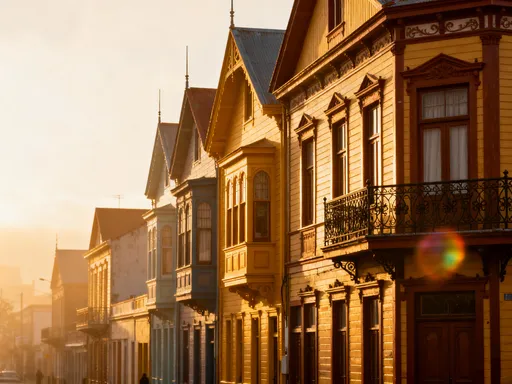
Nowhere is this more evident than along Avenida Paulista, the city’s most famous thoroughfare and a microcosm of its architectural journey. Opened in 1891 as a residential avenue for coffee barons, it gradually transformed into a financial and cultural artery. Today, it is lined with high-rises that showcase different phases of modern design. The Edifício Copan, designed by the legendary architect Oscar Niemeyer, curves like a wave through the skyline, its undulating form a bold statement of mid-century modernism. Nearby, the sleek, reflective surfaces of newer towers speak to contemporary tastes for minimalism and efficiency. Yet, tucked between them, you can still find early 20th-century buildings with ornate cornices and wrought-iron balconies, remnants of a more ornamental age.
Contrast this with the historic center, where preservation and decay exist side by side. Once the city’s commercial heart, this area saw decline in the late 20th century but is now undergoing revitalization. Here, you’ll find grand old theaters, neoclassical banks, and early skyscrapers that once symbolized São Paulo’s rising status. Some stand beautifully restored; others wear their age proudly, their facades cracked but dignified. The density is staggering—buildings rise so close together that sunlight struggles to reach the sidewalks, creating a canyon-like effect that emphasizes the city’s verticality.
What emerges from this architectural mosaic is a story of resilience and reinvention. São Paulo has never been a city that demolishes its past to make way for the future. Instead, it layers them, allowing old and new to coexist in a dynamic tension. This approach has created a skyline that is not just impressive in height, but rich in meaning. Every building, every street corner, tells a piece of the city’s journey—from agricultural wealth to industrial might, from national prominence to global relevance. For the observant traveler, the skyline is not just a backdrop, but a living archive of Brazil’s urban transformation.
Elevated Perspectives: Where to See the City Spread Below
To truly appreciate São Paulo’s scale and complexity, one must rise above it. Fortunately, the city offers numerous vantage points that allow visitors to take in its vast expanse, each offering a different perspective on its rhythms and patterns. One of the most accessible is the rooftop bar scene, particularly in neighborhoods like Vila Olímpia and Itaim Bibi. As dusk settles, these elevated terraces fill with locals and visitors sipping caipirinhas, their eyes drawn to the horizon where the city stretches in every direction. From here, the skyline transforms into a sea of light, with major avenues forming glowing veins that pulse with traffic.
For a more structured view, the Mirante do Sesc Pompeia offers one of the most rewarding observation decks in the city. Located in a former factory turned cultural center, the tower provides a 360-degree panorama that includes both the dense core and the greener outskirts. Unlike commercial observation decks in other global cities, this one retains a sense of authenticity—there are no entrance fees, no souvenir shops, just an open platform where people come to reflect, photograph, or simply breathe in the view. On clear days, you can see as far as the Serra da Cantareira mountains, a reminder that even in a city of concrete, nature is never far away.
Another unique perspective comes from the Beco do Batman in the Vila Madalena neighborhood. While best known for its vibrant street art, this narrow alley also offers upward sightlines that frame the skyline in unexpected ways. Towering buildings loom in the background, their blank walls serving as canvases for colorful murals. From this ground-level vantage, the city feels both intimate and monumental—a place where human expression meets urban scale. Photographers often linger here at golden hour, capturing the interplay of light, color, and verticality.
For those who prefer a more active experience, urban hiking trails like the one at Parque do Povo or the elevated walkways near the Instituto Moreira Salles provide panoramic views without the crowds. These spots are favored by locals, offering a quieter, more contemplative way to experience the city’s layout. The best times to visit are early morning or late afternoon, when the light is soft and the air is cool. Whether from a rooftop, a park, or a hidden alley, viewing São Paulo from above is not just about seeing—it’s about understanding the intricate balance between density and openness, order and chaos, that defines this megacity.
Street-Level Skyline: How the City Lives Beneath the Towers
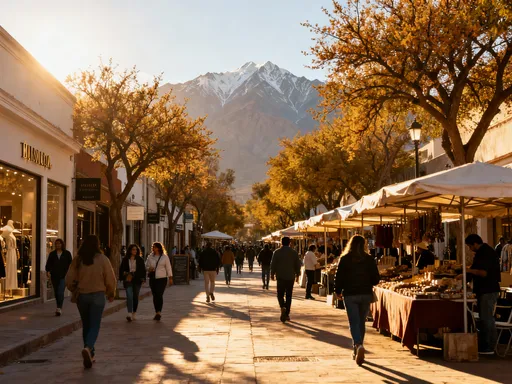
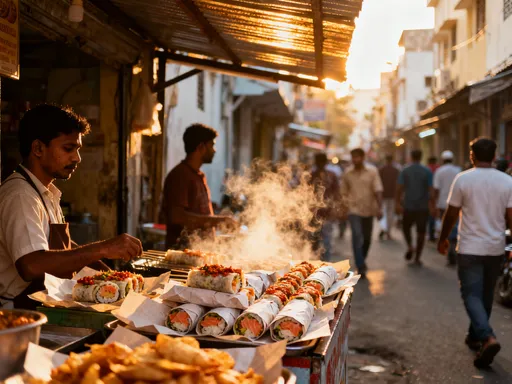
While the skyline dominates from a distance, São Paulo’s true character is revealed at ground level. Beneath the shadow of towering office buildings, life unfolds with remarkable vitality. Sidewalks buzz with vendors selling fresh fruit, warm pastries, and strong coffee in small paper cups. Public squares host impromptu dance circles, while transit hubs like the República or Tatuapé stations serve as crossroads where thousands pass through daily, each carrying their own routines and dreams. This is a city that thrives not despite its scale, but because of the human connections that animate it.
One of the best places to witness this energy is the Mercado Municipal, affectionately known as Mercadão. Housed in a stunning early 20th-century building with a stained-glass dome, the market is a feast for the senses. Inside, stalls overflow with tropical fruits, exotic spices, cured meats, and freshly baked bread. The air is thick with the scent of ripe mangoes and grilling chorizo. Families gather at communal tables, sharing plates of mortadella sandwiches and glasses of suco de maracujá. Above, the vaulted ceiling soars, a reminder that even utilitarian spaces in São Paulo are built with grandeur in mind.
Equally revealing are the city’s countless sidewalk cafés, particularly in neighborhoods like Pinheiros and Jardins. Here, residents pause between errands or meetings to enjoy a moment of stillness—a small espresso, a croissant, a conversation with a friend. These simple rituals ground the city, offering a counterpoint to the relentless pace of the business districts. Even in the busiest zones, there is always a bench, a tree-lined plaza, or a quiet corner where one can sit and watch the world go by.
Public transportation further illustrates how São Paulo functions as a living organism. The metro system, one of the most extensive in Latin America, moves millions daily with remarkable efficiency. Stations double as cultural spaces, featuring rotating art exhibits and live music. Above ground, buses and bike lanes weave through the grid, supported by a growing network of cycling infrastructure. This intricate web of movement ensures that the city remains accessible, even as it continues to grow. At street level, São Paulo is not a monument to isolation, but a testament to community, resilience, and the everyday beauty of shared urban life.
Light, Color, and Motion: The Skyline After Sunset
As the sun dips below the horizon, São Paulo undergoes a transformation that rivals any natural spectacle. The skyline, once defined by daylight and shadow, becomes a dynamic canvas of light and movement. Office towers switch off floor by floor, their windows blinking out like stars fading from the sky, while residential buildings begin to glow, each illuminated window a sign of life continuing into the night. Major landmarks take on new identities—Edifício Itália lights up in rotating colors, and the Farol Santander offers a golden crown atop its historic dome. The city does not sleep; it merely shifts gears.
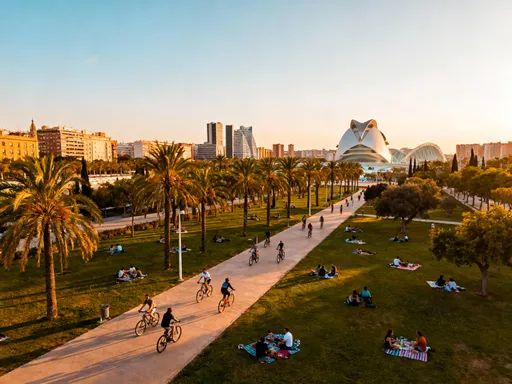
One of the most breathtaking vantage points after dark is from within Ibirapuera Park, São Paulo’s answer to Central Park. From the open lawns near the Obelisk, the skyline rises in the distance, framed by palm trees and reflecting pools. The contrast between nature and urbanity is striking—birds settle into the trees as helicopters patrol the skies above skyscrapers. Couples stroll along the pathways, while joggers and cyclists enjoy the cooler evening air. The park becomes a liminal space, where the city’s energy is felt but not overwhelming, a place to decompress and take in the view.
For photographers and urban explorers, nighttime offers endless opportunities. The elevated expressways, particularly the Marginal Pinheiros, provide cinematic views of the city’s illuminated arteries. Long-exposure shots capture the streaks of red and white headlights flowing like rivers of light. Areas like Avenida Paulista and Faria Lima become stages for urban theater, where illuminated billboards, neon signs, and the glow of smartphones create a layered visual experience. Even the rain adds to the drama—wet streets reflect the city’s lights, turning sidewalks into shimmering mirrors.
This nocturnal beauty is not limited to grand vistas. In residential neighborhoods, string lights decorate balconies, and small family-run restaurants spill warm yellow light onto the pavement. Children play under streetlamps, and neighbors chat from open windows. São Paulo at night is not just about spectacle—it is about continuity. The skyline, bathed in artificial light, becomes a symbol of endurance, a reminder that cities are not just structures, but living entities that breathe, evolve, and persist long after dark.
Hidden Layers: Offbeat Spots with Unexpected Views
Beyond the well-trodden paths and famous landmarks, São Paulo reveals its most authentic self in quieter, lesser-known corners. These hidden spots offer unexpected views of the skyline, not as a distant panorama, but as part of a lived-in, intimate landscape. One such place is the Horto Florestal, a sprawling urban forest on the city’s northern edge. Winding trails lead through dense vegetation, and at certain clearings, the skyline emerges abruptly between the trees—a surreal juxtaposition of wilderness and metropolis. Birdwatchers, families, and joggers come here not for the view, but for the escape, yet they are often surprised by how close the city remains, even in its greenest pockets.
Another gem is the rooftop garden of the Instituto Moreira Salles, a cultural foundation dedicated to Brazilian arts and photography. Tucked away in the Jardim Europa neighborhood, it offers a serene retreat with carefully curated greenery and a quiet terrace that overlooks the surrounding treetops and distant towers. Unlike commercial rooftops, this space invites contemplation, with benches, reading nooks, and seasonal exhibitions. It is a place where the city feels both present and softened, filtered through the lens of nature and culture.
The Pateo do Collegio, the historic site where São Paulo was founded in 1554, offers a different kind of perspective. Surrounded by modern skyscrapers, this small colonial square feels like a time capsule. From its steps, you can photograph the contrast between the modest church and the towering financial buildings behind it—a visual metaphor for the city’s layered identity. Nearby, the Galeria Prestes Maia, once a controversial housing complex, has become a symbol of urban resilience. Its long corridors and rooftop views are now appreciated by photographers and urbanists seeking to understand the city’s social fabric.
These offbeat locations share a common trait: they are not designed for tourists, but for residents. They do not offer sweeping, postcard-ready vistas, but moments of discovery—where the skyline appears unexpectedly, framed by vines, reflected in a puddle, or glimpsed through a gap in the buildings. For the traveler willing to wander beyond the guidebooks, these spots offer a truer sense of São Paulo’s rhythm, where beauty emerges not from perfection, but from the interplay of chaos and care, history and innovation, solitude and community.
Why This Cityscape Stays With You
São Paulo’s skyline does not impress because it is the tallest or the most futuristic. It lingers in memory because it feels alive. Unlike cities that present a polished, curated image, São Paulo embraces its contradictions—its grandeur and grit, its density and diversity, its relentless motion and quiet moments of stillness. To stand beneath its towers is to witness a city that is constantly becoming, where every building, every street, every light in the window tells a story of aspiration and endurance.
What stays with travelers is not just the visual scale, but the emotional resonance. This is a skyline shaped by waves of immigration, economic shifts, artistic movements, and civic pride. It reflects a society that builds upward not to escape the ground, but to elevate everyday life. The graffiti on a warehouse wall, the flower stand under a bridge, the elderly couple dancing in a plaza—these are not distractions from the skyline, but essential parts of it. São Paulo teaches us that urban beauty is not found in perfection, but in vitality.
For women between 30 and 55, many of whom balance family, work, and personal dreams, São Paulo’s energy can be deeply inspiring. It is a city that moves with purpose, yet makes space for connection, creativity, and reflection. It shows that complexity does not have to mean coldness—that even in the busiest streets, there is warmth, color, and humanity. To visit São Paulo is not just to see a new place, but to feel a different way of being urban.
In the end, the skyline reveals more than architecture. It reveals a spirit—one that is resilient, inclusive, and unafraid of its own imperfections. It invites travelers to look beyond the noise, to find poetry in the pavement, art in the alleys, and light in the shadows. São Paulo does not offer easy answers or picture-perfect moments. Instead, it offers something more valuable: a reminder that cities, like people, are most beautiful when they are real. And that is a revelation worth remembering.