You Won’t Believe How Valencia’s Public Spaces Are Breaking the Internet
I walked into Valencia expecting sun and paella—but found something way more addictive: public spaces that feel like they’re designed for joy. From bike-friendly boulevards to open-air plazas buzzing with life, this city turns ordinary moments into viral-worthy experiences. It’s not just beautiful; it’s smart, human-centered urban magic. And honestly? Every city should take notes.
The Urban Vibe That Feels Like a Social Media Dream
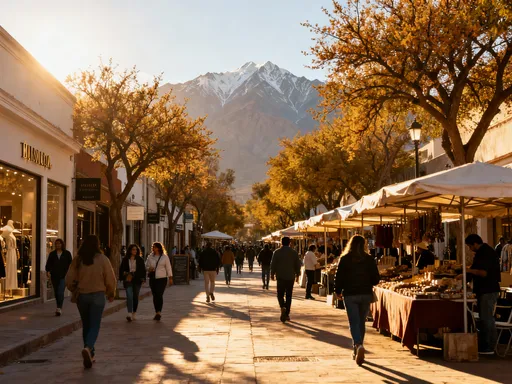
Valencia’s public spaces aren’t just functional—they’re shareable. Every corner seems composed with intention, offering clean lines, vibrant colors, and natural light that flatters both people and phones. Wide, well-maintained walkways invite strolling, while bursts of street art and spontaneous performances add unexpected charm. Unlike overcrowded tourist hotspots where authenticity fades under commercial pressure, Valencia’s urban design preserves a sense of daily life even in its most picturesque spots. Locals gather in shaded plazas with coffee and conversation, children laugh near splash fountains, and cyclists flow smoothly along tree-lined paths without competition from heavy traffic.
What sets these spaces apart is their ability to blend aesthetic appeal with genuine usability. The city doesn’t rely on gimmicks or staged installations; instead, it creates environments where people naturally want to linger. Benches are thoughtfully placed under canopy trees, water features provide cooling relief in summer, and open lawns welcome picnics and casual games. This balance between beauty and comfort generates organic content—photos, videos, stories—that feel personal rather than promotional. Travel bloggers and everyday visitors alike find themselves capturing moments that reflect real life, not curated fantasy.
The result? A steady stream of social media posts showcasing Valencia’s rhythm and warmth. These images don’t just highlight architecture or scenery—they capture emotion. A grandmother watching her grandchildren play by a fountain, friends sharing tapas at an outdoor table, a musician playing guitar beneath an arched gateway—these are the scenes that resonate online. Because they feel true, they spread. And because they spread, more people come to experience them, continuing the cycle. In an age where digital presence shapes travel decisions, Valencia has mastered the art of designing spaces that don’t just look good—they feel good, and that goodness gets shared.
Turia Gardens: Where Nature Replaces Noise
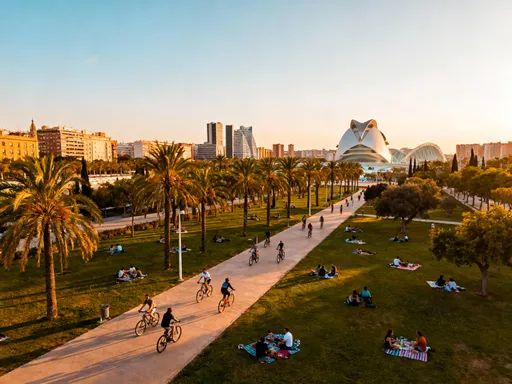
One of Valencia’s most remarkable transformations began with disaster. In the 20th century, devastating floods led the city to divert the Turia River, leaving behind a dry riverbed cutting through the urban core. Rather than paving it over for roads or development, city planners made a bold decision: turn it into a green oasis. Today, the Turia Gardens stretch for nearly nine kilometers, forming a continuous park that winds from the western edge of the city all the way to the coast. This ribbon of green is not just a park—it’s a living network of recreation, history, and natural beauty.
The gardens are designed with variety in mind. Joggers follow winding trails shaded by olive and palm trees, while families spread blankets on open grassy areas for weekend picnics. Children climb on playgrounds shaped like medieval castles, and teenagers shoot hoops at outdoor basketball courts tucked between groves. Along the way, remnants of Valencia’s past peek through—Roman aqueduct ruins, Gothic bridges, and traditional tilework—offering quiet reminders of the city’s long evolution. It’s this blend of old and new, nature and culture, that makes the Turia Gardens so visually compelling.
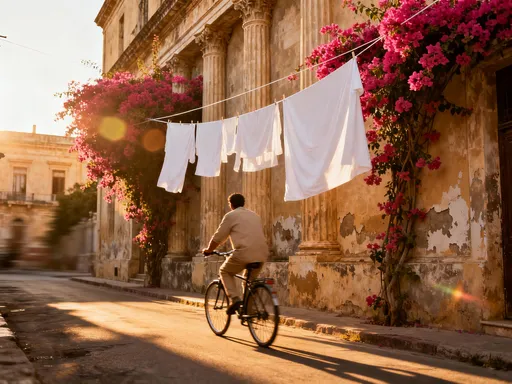
Photographers and content creators are drawn to the contrast: a cyclist gliding past ancient stonework, a couple reading under a flowering mimosa tree with a modern skyline in the background, or a golden sunset reflecting off a quiet pond. The park’s linear layout also makes it ideal for time-lapse videos and walking tours, contributing to its popularity on platforms like Instagram and YouTube. But beyond its visual appeal, the Turia Gardens represent a deeper philosophy—one that values green space not as an afterthought, but as essential infrastructure. By choosing nature over noise, Valencia created a space where relaxation and activity coexist, where city life breathes easier, and where every turn offers a moment worth sharing.
Plaza de la Virgen and Plaza del Ayuntamiento: The Social Heartbeat
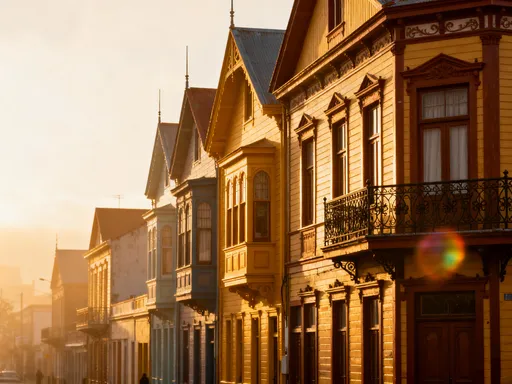
In the heart of Valencia’s old town, two plazas stand as twin centers of community life. Plaza de la Virgen, nestled beside the grand Valencia Cathedral, exudes timeless elegance. Its honey-colored stone buildings and arched colonnades frame a spacious square where outdoor cafés spill onto cobblestones. Locals gather here in the mornings with espresso, in the evenings with wine, and throughout the day with conversation. The gentle trickle of a central fountain provides a soothing soundtrack, while shaded corners offer refuge from the Mediterranean sun. This plaza doesn’t feel like a monument frozen in time—it pulses with daily rhythm.
A short walk away, Plaza del Ayuntamiento presents a different energy. Home to the city hall and surrounded by neoclassical buildings, this expansive square transforms with the hours. By day, it’s a transit hub with tram lines and bicycle racks. By night, it becomes a stage for light displays, seasonal markets, and public celebrations. During festivals like Las Fallas, the plaza erupts in color and music, drawing thousands. Even in quieter moments, its wide-open space invites movement—children chasing bubbles, dancers practicing salsa, tourists pausing to take in the symmetry of its architecture. The interplay of light and reflection, especially after rain, creates naturally cinematic visuals.
Together, these plazas form a dynamic duo that reflects Valencia’s balance of tradition and modernity. Neither is a tourist-only zone; both are genuinely used by residents, which gives them authenticity. That authenticity is key to their viral appeal. When influencers film here, they’re not posing in an empty set—they’re part of a living scene. A time-lapse video capturing the shift from morning stillness to evening animation, or a candid reel of people laughing at a street performer’s joke, feels real because it *is* real. Social media thrives on moments that resonate emotionally, and these plazas deliver them in abundance. They prove that great public spaces aren’t just about design—they’re about life unfolding, and that’s what people love to share.
Ciutat de les Arts i les Ciències: Architecture as Public Theater
Rising from the dry riverbed of the former Turia River, the Ciutat de les Arts i les Ciències is a vision of the future rooted in the present. Designed by renowned architects Santiago Calatrava and Félix Candela, this cultural complex combines sweeping white curves, reflective pools, and glass domes that shimmer under the Valencian sun. At first glance, it looks like a film set—otherworldly, dramatic, almost unreal. But unlike many architectural marvels that feel distant or untouchable, this space is designed for interaction. It’s not just a place to look at; it’s a place to be in.
Locals treat the complex as an extension of their daily lives. Skateboarders glide along smooth pathways near the fountain plaza, families explore the interactive exhibits at the Science Museum, and couples stroll hand-in-hand beside the lagoon that mirrors the Hemisfèric’s dome. The open layout encourages exploration, and the lack of entry barriers (many areas are freely accessible) means anyone can enjoy its beauty. During golden hour, the reflective surfaces catch the warm light, creating a natural spotlight effect that draws photographers and influencers from around the world.
The visual drama of the architecture makes it a magnet for content creation. A silhouette against the sweeping curve of the Palau de les Arts, a drone shot gliding over the mirrored pools, a slow-motion clip of water dancing in the fountain—these are the kinds of visuals that dominate travel feeds. But beyond the spectacle, the space fosters curiosity and wonder. Children press their hands against the glass of the Oceanogràfic, the largest aquarium in Europe, while adults pause to admire the engineering brilliance of the structures. The city didn’t build this complex to be a photo op; it built it to inspire. Yet, because it does both so well, it becomes one of the most shared locations in Spain. In Valencia, even high-concept architecture is designed for human connection—and that’s what makes it truly go viral.
How Valencia Designs for Human Joy (Not Just Traffic)
Most cities measure success by how quickly cars move. Valencia measures it by how comfortably people stay. Over 70% of public space in the city is dedicated to pedestrians, cyclists, and communal use—a radical shift from car-centric urban planning. Wide sidewalks, shaded seating areas, and frequent water fountains show a deep commitment to comfort and accessibility. Traffic is limited in key zones, especially in the historic center and along the Turia Gardens, reducing noise, pollution, and stress. The result is a city that feels calmer, safer, and more inviting.
This people-first approach isn’t just about aesthetics; it’s about behavior. When streets feel safe and pleasant, people walk more, talk more, and spend more time outside. Children play freely near fountains, elders sit on benches reading newspapers, and friends meet for impromptu coffee in open plazas. These small, everyday interactions are the foundation of community—and they’re also the raw material of viral content. A video of a toddler chasing pigeons in a sunlit square, or a group of teenagers dancing to a busker’s music, gains traction not because it’s perfect, but because it feels human.
Valencia’s urban design also prioritizes inclusivity. Public restrooms, baby-changing stations, and wheelchair-accessible pathways ensure that everyone can participate. Events in public spaces—from outdoor film screenings to seasonal markets—are free or low-cost, removing financial barriers. This openness fosters a sense of belonging, where both locals and visitors feel welcome. When people feel seen and valued in a space, they’re more likely to engage with it—and to share their experience. In an era where digital connection often replaces physical interaction, Valencia proves that well-designed public spaces can bring people together in real life, and that real-life joy is the most shareable thing of all.
Why These Spaces Go Viral (And What Other Cities Can Learn)
The viral success of Valencia’s public spaces isn’t accidental—it’s intentional. These areas offer a rare combination: visual contrast, cultural authenticity, and emotional warmth. They are photogenic without being artificial, modern without erasing history, and lively without feeling chaotic. Unlike over-commercialized destinations that prioritize branding over experience, Valencia keeps its spaces genuine. There are no neon signs, no chain stores crowding the plazas, no forced photo ops. Instead, the city trusts that beauty and function, when combined, will create moments worth capturing.
Another key factor is accessibility. Most of Valencia’s iconic spaces are free to enter and open around the clock. This ensures that they remain democratic—available to everyone, not just tourists or the affluent. When people feel that a place belongs to them, they treat it with care and share it with pride. A mother posting a photo of her child playing in a fountain isn’t promoting a brand; she’s celebrating a moment of joy. That authenticity resonates more deeply than any advertisement.
For other cities, the lesson is clear: invest in public spaces that serve people, not just vehicles or developers. Prioritize greenery, safety, comfort, and beauty—not as luxuries, but as necessities. Design for lingering, not just passing through. Encourage spontaneity by leaving room for unscripted moments. And above all, trust that when people are given spaces where they feel happy, they will naturally want to share that happiness. Virality, in this case, isn’t the goal—it’s the outcome of doing urban design right.
Planning Your Own Valencia Public Space Adventure
Visiting Valencia with an eye for its public spaces transforms a simple trip into a journey of discovery. Begin at the western edge of the Turia Gardens, where the park feels most like a nature trail. Walk or rent a bike and follow the green ribbon as it weaves through neighborhoods, passing playgrounds, sports fields, and quiet groves. Stop at the Gulliver Park, where children climb on a massive sculptural figure of the literary character, or pause at the old bullring turned cultural center, now home to a flower market on weekends.
As you move east, the city opens up. Arrive at the Ciutat de les Arts i les Ciències in the late afternoon, when the light is soft and the reflections in the pools are at their most dramatic. Take time to explore the exterior freely—no ticket needed to enjoy the architecture or the surrounding lawns. If you have time, visit the Oceanogràfic or the Science Museum, but even a short walk here leaves a lasting impression.
In the evening, head to the historic center. Start at Plaza de la Virgen, where the cathedral glows in the dusk. Have a drink at one of the outdoor cafés and watch the square come alive. Then walk a few minutes to Plaza del Ayuntamiento, especially if there’s a market or light show scheduled. The contrast between the two plazas—one timeless, one dynamic—captures the essence of Valencia.
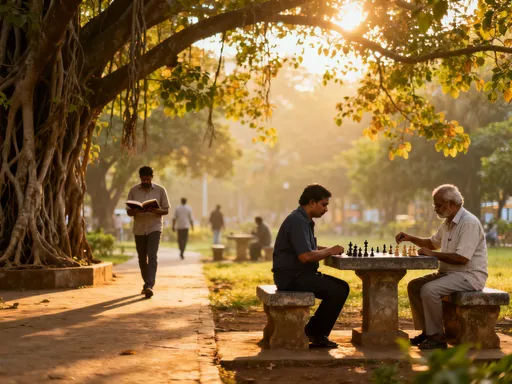
For the best experience, travel like a local. Use the efficient metro or tram system to connect zones, or rely on the city’s public bike-sharing program. Visit early in the morning to avoid crowds and catch the golden light. Bring a small portable seat or blanket—many locals do—and find a quiet corner to observe the rhythm of the city. The most memorable moments often come from simply sitting and watching: a street musician tuning his guitar, an elderly couple sharing a pastry, a group of friends laughing over a board game on a park table. These are the scenes that stay with you—and the ones you’ll want to share.
Valencia proves that great public spaces aren’t just nice to have—they’re essential. They shape how we move, connect, and remember places. By designing for joy, not just efficiency, the city has created an organic viral phenomenon: real moments, shared freely. It’s a model worth copying—not for likes, but for life.