You Won’t Believe What I Discovered in Lübeck’s Forgotten Alleys
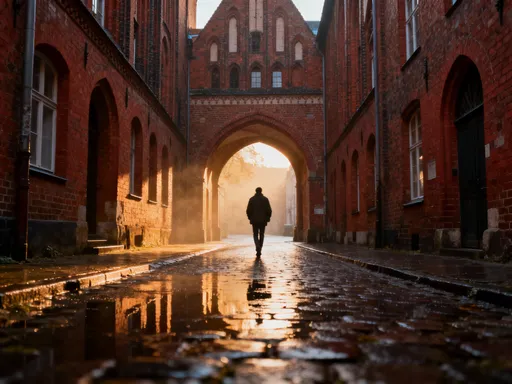
Walking through Lübeck, I wasn’t just seeing bricks and rooftops—I was stepping into centuries of stories. The way the light hits the red-tiled gables at golden hour? Absolutely magical. As a place where Gothic architecture breathes history into every stone, Lübeck doesn’t shout for attention—it pulls you in quietly. I went looking for beauty, but what I found was deeper: harmony between design and time, structure and soul. This is more than a city tour; it’s an architectural meditation. What unfolds in the narrow alleys and quiet courtyards of this northern German gem is not merely preservation—it’s continuity. A city shaped by merchants, monks, and master builders, Lübeck stands as a living testament to how architecture can carry the weight of history without collapsing under it.
First Impressions: The Silent Grandeur of Lübeck’s Skyline
Arriving in Lübeck by train or car, one is immediately struck by a skyline unlike any other in northern Europe. Rising above the flat landscape of Schleswig-Holstein, five great church spires pierce the horizon, their silhouettes sharp against the often-gray Baltic sky. These are not random towers but deliberate markers of identity and power—symbols of Lübeck’s golden age as the leading city of the Hanseatic League, a medieval trading network that once spanned the North and Baltic Seas. The most dominant among them is the twin spire of St. Mary’s Church, or Marienkirche, standing at 125 meters, once the tallest brick structure in the world. Its vertical thrust was no accident; in medieval urban planning, height conveyed dominance—spiritual, civic, and economic.
This emphasis on verticality was both practical and symbolic. In a city built on trade, visibility mattered. Ships navigating the Trave River could spot Lübeck’s skyline long before docking, a visual promise of prosperity and protection. The churches, particularly St. Mary’s, were not only houses of worship but also civic statements—built and funded by the merchant elite to reflect their influence. The architectural style, North German Brick Gothic, emerged as a regional response to the lack of natural stone, turning a limitation into an aesthetic triumph. The uniformity of red brick across major buildings creates a cohesive cityscape, where no single structure overwhelms, yet each contributes to a collective grandeur.
St. Mary’s Church, completed in the 14th century, became a prototype for over 70 other churches around the Baltic, from Rostock to Tallinn. Its hall church design—where the nave and aisles are of nearly equal height—allows for expansive interior space and an uninterrupted flow of light through tall clerestory windows. From the outside, its west façade presents a symmetrical, almost fortress-like presence, grounded by massive buttresses and crowned with a rose window that glows amber at sunset. This is not architecture meant to charm—it is built to endure, to inspire reverence, and to announce Lübeck’s place at the center of a vast commercial world.
The Language of Brick: Why Lübeck Speaks in Red Stone
If Lübeck has a voice, it is made of brick—specifically, the locally fired red clay bricks that define its architectural character. This tradition, known as Backsteingotik, or brick Gothic, is more than a building method; it is a regional dialect of stone and mortar. Unlike the limestone and sandstone used in southern Europe, the North German plains offered little in the way of natural stone. Instead, abundant clay and access to waterways for transport made brick the material of choice. What began as necessity evolved into artistry, with masons developing sophisticated techniques in bricklaying, glazing, and decorative patterning.
Walk along the façade of Lübeck’s Town Hall, one of the longest in Germany stretching over 80 meters, and you’ll see how brick can convey both authority and elegance. The alternating bands of glazed and unglazed brick create a shimmering effect in sunlight, while stepped gables and ornamental friezes add rhythm and detail. Each brick was hand-molded and fired in wood-burning kilns, resulting in slight variations in color and texture that give the buildings a warm, human quality. The use of black-glazed bricks to form crosses, stars, and geometric motifs was not merely decorative—it signaled wealth, piety, and civic pride.
The Burgtor, one of the city’s original gateways, further illustrates this language of brick. Its arched entrance is flanked by octagonal towers, their surfaces articulated with recessed niches and corbelled turrets. The careful arrangement of brick bonds—such as the herringbone and basketweave patterns—serves both structural and symbolic purposes, reinforcing weak points while showcasing craftsmanship. Even utilitarian structures like warehouses along the canals were built with care, their gabled roofs and rhythmic window placements turning commerce into aesthetics. In Lübeck, brick was never humble—it was the medium through which a city wrote its identity.
Gabled Streets and Hidden Courtyards: Urban Rhythm and Private Worlds
Strolling through streets like Mengstraße and Königstraße, one enters a world where façades tell stories of ambition and status. The stepped gables—those jagged, upward-reaching profiles crowning the buildings—are among Lübeck’s most iconic features. Originally derived from fire protection regulations, these gables evolved into elaborate displays of wealth and taste. The higher and more ornate the gable, the more prominent the family or guild that occupied the house. Some are adorned with carved stone reliefs, others with patterned brickwork, each a signature in a city of architectural competition.
Yet behind these proud fronts lie hidden worlds—the Höfe, or courtyards, that form the private heart of Lübeck’s urban fabric. Accessed through narrow passageways called Diele, these inner spaces were once the operational core of merchant life. Goods arrived by canal, passed through the ground-floor storage areas, and were processed or traded in the courtyard, shielded from public view. Above, the merchant’s family lived in spacious apartments, often with private chapels or gardens. These courtyards were semi-public, semi-private—spaces where business, domestic life, and social hierarchy intersected.
Today, many of these Höfe remain in use, converted into offices, cafés, or residential units, but their layout preserves the medieval logic of separation and efficiency. The Grosse Elbgasse, for instance, leads to the Engelsgarten, a tranquil courtyard surrounded by timber-framed buildings that date back to the 15th century. The sense of discovery is palpable—each passageway offers a transition from public street to intimate retreat. This layered urban design, where grandeur and privacy coexist, reflects a sophisticated understanding of city living that feels remarkably modern. Lübeck’s streets do not unfold all at once; they reveal themselves gradually, rewarding the attentive walker with moments of quiet beauty.
Sacred Spaces: Light, Height, and Spiritual Engineering
Step inside St. Mary’s Church, and the atmosphere shifts instantly. The vast interior, illuminated by shafts of colored light filtering through 19-meter-tall stained glass windows, evokes a sense of awe that is both spiritual and architectural. The hall church design eliminates visual barriers, allowing the eye to travel uninterrupted from the entrance to the high altar. The columns rise like trees in a forest, their capitals branching into ribbed vaults that seem to hover weightlessly overhead. This is not just a place of worship—it is a carefully engineered experience, where space, light, and sound are calibrated to elevate the soul.
Light plays a central role in this spiritual engineering. The large clerestory windows, filled with modern glass that replaced originals lost in war, are positioned to capture the low northern sun. At midday, light washes the white-washed walls in a soft glow; in the late afternoon, it slants across the floor, highlighting the intricate patterns of the tile work. The effect is one of transcendence—of being lifted beyond the mundane. This was intentional. In the Gothic tradition, light symbolized divine presence, and architects manipulated it with precision, using window placement, vault height, and reflective surfaces to create a sacred atmosphere.
In contrast, Lübeck Cathedral, founded in 1173, offers a more contemplative experience. Though partially rebuilt after wartime damage, its Romanesque origins are still evident in the thick walls, rounded arches, and intimate chapels. The acoustics here are different—more contained, more reverent. This is fitting, given the city’s deep musical heritage; St. Mary’s was the workplace of Dieterich Buxtehude, whose organ works influenced Johann Sebastian Bach. The architecture supports the music, with long reverberation times enhancing choral and organ performances. In both churches, sound is not an afterthought—it is woven into the design, making the act of listening a form of participation in the sacred.
Survival Through Fire and War: How Architecture Held Its Ground
No discussion of Lübeck’s architecture is complete without acknowledging the trauma of the night of March 28–29, 1942. In a single bombing raid during World War II, over 1,000 people lost their lives, and much of the historic center was reduced to rubble. St. Mary’s Church, the Town Hall, and dozens of merchant houses were severely damaged. The firestorm that followed consumed wooden roofs and interiors, leaving behind skeletal walls of brick standing like ghosts in the smoke. For a moment, it seemed that centuries of history had been erased in hours.
Yet Lübeck chose not to surrender to ruin. In the years that followed, a meticulous reconstruction effort began, guided by a philosophy of authenticity. Rather than replacing old structures with modern buildings, city planners and architects committed to rebuilding what had been lost, using original techniques and materials wherever possible. St. Mary’s Church, for example, was reconstructed to its pre-war appearance, with new timber roofs modeled on historical records and photographs. The stained glass windows, destroyed in the fire, were replaced with designs that honored the original style while incorporating modern artistic expressions.
This commitment to faithful restoration set a precedent for postwar European urban renewal. Lübeck demonstrated that a city could heal without erasing its past. At the same time, the reconstruction was not a mere imitation. In some areas, such as the courtyard of the former Hospital of the Holy Spirit, modern elements were introduced with restraint—glass panels, steel railings, contemporary lighting—creating a dialogue between old and new. The result is a city that bears the scars of history but refuses to be defined by them. The preserved zones, now protected as a UNESCO World Heritage Site since 1987, stand as a testament to resilience, not just of people, but of architecture itself.
Living Architecture: How Locals Interact with Historic Structures Today
Lübeck’s architecture is not locked behind museum ropes—it is lived in, used, and loved. Walk through the Altstadt on a weekday morning, and you’ll see residents unlocking doors to apartments above bakeries, children cycling past centuries-old guildhalls now housing bookshops, and café owners setting out tables in cobbled courtyards. The ground floors of historic buildings buzz with activity: a chocolatier in a 16th-century house sells marzipan, a craft brewery operates from a former warehouse, and a music school hosts recitals in a renovated chapel. This seamless integration of old and everyday life is what makes Lübeck feel alive, not frozen.
School groups often gather in the Marienkirche or the Cathedral, sketching arches and gables as part of art or history lessons. Local artisans offer workshops in traditional bricklaying, stained glass restoration, and timber framing, passing down skills that have shaped the city for generations. Seasonal events like the Christmas market transform the Town Hall square into a festive hub, with wooden stalls nestled beneath the glow of historic lampposts. These activations ensure that the city’s heritage is not just preserved but experienced.
Even urban planning decisions reflect a deep respect for continuity. New construction within the old town is subject to strict guidelines—building height, roof pitch, and material must harmonize with the existing fabric. Yet this does not stifle innovation. Contemporary architects have responded with sensitivity, designing buildings that echo the rhythm of gables and courtyards without imitating them. A new residential complex near the Burgtor, for example, uses dark brick and stepped profiles to blend in, while its interior layout meets modern living standards. In Lübeck, preservation is not about stopping time—it’s about allowing the city to grow with grace.
Why Lübeck Matters: A Model of Harmonious Urban Design
What makes Lübeck truly exceptional is not just its collection of beautiful buildings, but the harmony that binds them. Unlike many historic cities where styles clash across eras, Lübeck presents a remarkably unified aesthetic—rooted in brick, scaled to the human body, and organized around shared public spaces. This coherence was not accidental; it emerged from centuries of shared civic values, where merchants, clergy, and craftsmen all contributed to a common vision of urban life.
In an age of fragmented cityscapes—where glass towers rise beside neglected neighborhoods and historic districts become tourist enclaves—Lübeck offers a powerful alternative. It shows that a city can evolve without losing its soul. The consistency of material, the rhythm of gables, the balance between public and private space—all contribute to a sense of belonging that is increasingly rare. Visitors often remark on the city’s tranquility, its walkability, its sense of order. These are not accidental qualities; they are the result of thoughtful design sustained over time.
Lübeck’s UNESCO designation recognizes more than architectural beauty—it honors a living tradition of urban care. The city teaches us that preservation is not about nostalgia, but about responsibility. It invites us to imagine cities where beauty is not a luxury, where history is not a burden, and where every brick laid today considers the eyes of those who will walk these streets centuries from now. In a world of rapid change, Lübeck stands as a quiet rebuke to disposability—a reminder that some things are worth building to last.
Lübeck isn’t frozen in time—it lives because its architecture was built to endure, not just impress. Every brick, gable, and gateway serves as both memory and function. In a world of disposable design, Lübeck stands as proof that beauty, resilience, and community can shape a city’s soul. To walk here is to witness harmony written in stone—and to believe it’s possible elsewhere.