You Won’t Believe These Hidden Corners of Athens
Athens isn’t just about the Parthenon and crowded tourist trails. I stumbled upon quiet neighborhoods where time slows down and architecture tells forgotten stories. Think sun-bleached neoclassical facades, hidden courtyards, and Art Deco gems no guidebook mentions. This is Athens beyond the postcard—raw, real, and rich in character. If you're craving authenticity over crowds, let me show you a side of the city most never see.
Beyond the Acropolis: Discovering Athens’ Quiet Streets
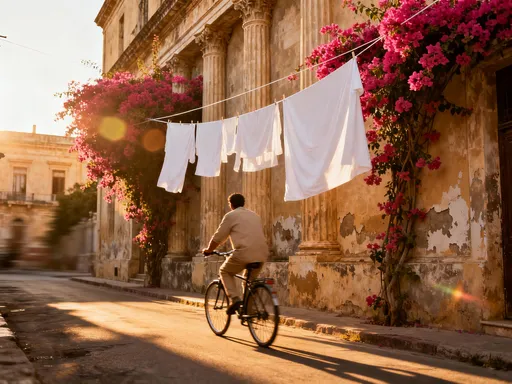
Athens is often reduced to its crown jewel—the Acropolis—but just steps away from the marble grandeur lies a quieter, more intimate city. While millions ascend the rocky hill each year, fewer venture into the narrow lanes of neighborhoods like Anafiotika’s less-trodden edges or the residential backstreets of Koukaki. These areas, nestled in the shadow of ancient monuments, offer a different rhythm. Here, laundry flutters between balconies adorned with geraniums, elderly residents sip coffee in shaded squares, and cats nap on sun-warmed cobblestones. The pace is slower, the atmosphere unhurried, and the sense of daily life more palpable.
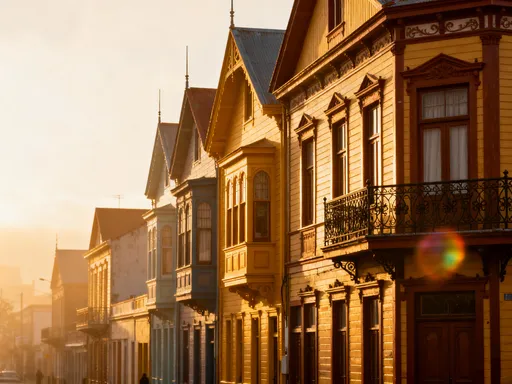
What makes these zones special is not just their tranquility but their architectural continuity. Unlike the heavily commercialized Plaka, where souvenir shops dominate, these neighborhoods preserve a mix of early 20th-century housing, modest family homes, and repurposed communal buildings. The facades may be weathered, but they carry the imprint of decades—hand-painted shutters, wrought-iron railings, and tiled entryways that speak to a time when craftsmanship was woven into everyday living. This is not a curated heritage site but a living urban fabric, where history isn’t displayed behind glass but lived in real time.
For travelers, stepping into these streets means shifting from observation to immersion. You begin to understand how Athenians inhabit their city—not just as custodians of antiquity but as residents of a layered, evolving metropolis. The absence of tour groups allows for genuine encounters: a shopkeeper offering a taste of homemade spoon sweets, a neighbor watering plants on a third-floor balcony, or the scent of baking bread drifting from a corner bakery. These moments, fleeting yet meaningful, reveal a city that breathes beyond its monuments. By choosing to wander beyond the obvious, visitors gain access to a more human-scale Athens—one defined not by checklist tourism but by presence and connection.
Neoclassical Gems in Pangrati and Mets
Just a short walk from the bustling city center, the neighborhoods of Pangrati and Mets unfold like open-air museums of 19th-century urban design. Here, rows of neoclassical buildings stand with quiet dignity, their stonework softened by time but still commanding attention. These structures, built during Athens’ expansion in the late 1800s, reflect a period when the city sought to balance its ancient identity with modern European aspirations. Ornate cornices, symmetrical windows, and carved pediments echo the aesthetics of Vienna and Munich, yet adapted to the Mediterranean light and local materials.
What’s remarkable is how many of these buildings have survived decades of urban change. Unlike other European capitals where historic housing was demolished for high-rises, Athens has retained much of its mid-density fabric. In Pangrati, for example, tree-lined avenues like Michalakopoulou Street are lined with three- and four-story homes featuring marble details, recessed porches, and decorative brickwork. Some have been carefully restored, their facades cleaned to reveal original hues, while others wear their age proudly—peeling paint, rusted grilles, and ivy creeping up stone walls. This blend of preservation and natural decay adds depth, making the streets feel lived-in rather than museum-perfect.
Urban renewal efforts in recent years have focused on stabilizing these buildings without erasing their character. Local initiatives, supported by municipal programs, encourage owners to maintain structural integrity while respecting historical features. The goal isn’t gentrification but continuity—ensuring that these homes remain affordable and occupied by long-term residents. As a result, you won’t find luxury boutiques or trendy cafes on every corner. Instead, family-run grocery stores, neighborhood pharmacies, and small workshops continue to serve the community, preserving the social fabric as much as the architectural one.
For the curious traveler, a walking route through these areas offers a masterclass in detail. Start at Evangelismos metro station and head southeast into Pangrati, following quiet side streets like Lycavittou and Kallidromiou. Notice the variety in balcony design—some with geometric ironwork, others with wooden awnings. Look for remnants of original color schemes beneath layers of paint, or the way courtyards are glimpsed through half-open gates. In Mets, the area around the historic Theatre of Pergamon provides another cluster of well-preserved examples, where architecture and green space coexist. These walks require no tickets or tours—just attention and respect for the neighborhoods as living spaces, not just photo opportunities.
Art Deco Whispers in Exarcheia and Kolonaki
While Athens is rarely associated with Art Deco, a closer look reveals subtle but striking influences from the 1930s woven into its urban landscape. In neighborhoods like Exarcheia and Kolonaki, apartment buildings and former commercial structures bear the hallmarks of this bold modern style: stepped facades, zigzag motifs, and streamlined geometric forms. These details, often overlooked amidst the district’s vibrant street life, offer a glimpse into a period when Greece embraced cosmopolitan design trends. The architecture of this era reflects a moment of optimism—between the wars and before the upheavals of mid-century—when modernity was seen as both aesthetic and social progress.
In Exarcheia, known today for its intellectual energy and street art, some buildings retain Deco-era entrances with stylized floral reliefs or sunburst patterns above doorways. These features contrast beautifully with the contemporary graffiti that now covers many walls, creating a visual dialogue between past and present. A building on Stournari Street, for instance, displays vertical fluting on its upper floors—a Deco signature—while its ground level hosts a record shop plastered with protest posters. This layering of time is part of what makes the neighborhood so compelling: history isn’t erased but absorbed into the current culture.
Kolonaki, by contrast, presents a more refined expression of the style. Here, smaller apartment blocks and former villas incorporate curved corners, glass-block panels, and minimalist ornamentation. The influence is quieter, more integrated into the upscale residential character of the area. A walk along Vasilissis Sophias Avenue reveals buildings where Deco elegance meets neoclassical proportion, creating a harmonious blend. These structures were often designed for professionals and intellectuals, reflecting a lifestyle that valued both comfort and cultural sophistication.
For travelers, spotting these details requires slowing down. Look above eye level—many decorative elements are on upper floors or beneath eaves. Notice the materials: smooth stucco, contrasting stone inlays, or metalwork with geometric precision. Photography is best in the late afternoon when sunlight highlights textures and shadows. And while these areas are public, it’s important to be mindful—these are not ruins but homes. A respectful distance, quiet observation, and avoiding intrusive photography ensure that appreciation doesn’t become disruption. In seeking out these architectural whispers, visitors engage in a form of slow tourism that rewards patience and curiosity.
Courtyards and Hidden Gardens: The Soul of Old Athens
One of Athens’ most enchanting secrets lies behind unmarked doors and weathered gates: the interior courtyards of old city homes. Tucked within block-long buildings, these private oases blend Greek domestic traditions with Mediterranean garden design. Often invisible from the street, they open like hidden worlds—tile-paved spaces shaded by fig trees, climbing jasmine, and potted citrus. Some are modest, just a few square meters with a bench and a fountain; others are lush, multi-level retreats where families gather in summer evenings. These courtyards were once central to urban living, providing light, ventilation, and a touch of nature in dense neighborhoods.
Historically, such spaces served both practical and social functions. In the pre-air-conditioning era, they acted as natural cooling systems, drawing breezes through surrounding rooms. They also offered semi-private areas for women to socialize, children to play, or meals to be served away from the street’s dust and noise. Architecturally, they reflect a blend of Ottoman-era influences and local building practices, where inward-focused design prioritized privacy and family life. Many were built around a central well or water feature, reinforcing their role as domestic sanctuaries.
Today, while most remain private, a growing number have been thoughtfully repurposed. Some old mansions in Plaka and Thissio have transformed their courtyards into café seating areas, where guests sip coffee under grape arbors. Cultural centers and art galleries in Anafiotika and Koukaki use them for small exhibitions or music events, allowing public access during opening hours. These adaptations honor the original spirit of the spaces—community, tranquility, and connection to nature—while giving visitors a rare glimpse inside.
For travelers, experiencing these courtyards requires sensitivity. When visiting a café or gallery with a courtyard, enter quietly and avoid treating it as a photo set. If you’re lucky enough to be invited into a home, follow local customs: remove shoes if asked, speak softly, and express appreciation without overstepping. Never attempt to enter closed or residential courtyards—respect for boundaries is essential. The beauty of these spaces lies not just in their aesthetics but in their continued role as places of rest and gathering. By honoring that purpose, visitors become part of their ongoing story rather than mere observers.
Modernist Surprises in Nea Kallikrateia and Gazi
Few associate Athens with mid-20th-century modernism, yet neighborhoods like Nea Kallikrateia and Gazi hold unexpected examples of this forward-looking architectural style. Emerging in the postwar decades, these buildings reflect a period of reconstruction and optimism, when Greece looked to functional design and urban planning as tools for progress. In Nea Kallikrateia, a residential area developed in the 1950s and 60s, you’ll find apartment blocks with flat roofs, ribbon windows, and exposed concrete frames—hallmarks of European modernism adapted to the Greek climate. Balconies are wide and unadorned, designed for outdoor living, while communal stairwells let in natural light and air.
Gazi, once an industrial zone centered around the old gasworks, has retained fragments of this era in its adaptive reuse projects. The Technopolis cultural complex, housed in the renovated gas plant, preserves original brick structures alongside modern interventions, creating a dialogue between old and new. Nearby, former workshops and storage buildings have been converted into studios, galleries, and performance spaces, their clean lines and open layouts ideal for creative use. The area’s transformation hasn’t erased its industrial soul but reinterpreted it for contemporary life.
What’s notable about this modernist legacy is its integration with the city’s broader architectural narrative. Unlike cities where modernism meant demolition of the old, Athens layered it atop existing forms. In Nea Kallikrateia, for example, modernist blocks stand beside earlier neoclassical homes, creating a visual timeline of urban development. The materials—concrete, glass, steel—are utilitarian, yet softened by time, climbing vines, and residents’ personal touches like potted plants and hand-painted signs.
For visitors, exploring these areas offers a chance to see Athens not just as an ancient capital but as a modern city shaped by real-world needs. A walk through Nea Kallikrateia reveals quiet streets with playgrounds, corner bakeries, and elderly residents playing backgammon in shaded squares—signs of enduring community life. In Gazi, weekend markets and open-air concerts animate the industrial spaces, showing how design can evolve without losing its essence. These neighborhoods remind us that architecture isn’t just about beauty but about how people live, work, and gather. By appreciating this layer of the city, travelers gain a fuller understanding of Athens as a place of continuous adaptation.
Why Offbeat Architecture Matters for Travelers
Exploring Athens’ lesser-known architectural corners does more than fill a photo album—it deepens cultural understanding. While iconic sites like the Parthenon offer awe, they often exist in isolation, presented as timeless relics. In contrast, the city’s everyday architecture tells a story of continuity, change, and resilience. It shows how Athenians have lived, adapted, and rebuilt across generations. By walking through neighborhoods where history isn’t staged but embedded in the streets, visitors move beyond passive sightseeing to active engagement.
There’s value in both experiences. Monumental sites provide context and inspiration; offbeat spaces offer intimacy and authenticity. A balanced approach allows travelers to appreciate Athens in its full dimension—its grandeur and its grit, its past and its present. Moreover, focusing on architecture encourages mindful travel. Instead of rushing from one attraction to the next, you begin to notice details: the curve of a staircase, the pattern of tiles, the way light falls on a courtyard wall. This kind of observation fosters presence, turning a journey into a series of discoveries rather than checkmarks.
It also supports sustainable tourism. When visitors disperse beyond the main attractions, economic benefits reach more local businesses—family-run tavernas, neighborhood bookshops, artisans selling handmade goods. It reduces pressure on overcrowded sites and promotes longer, more meaningful stays. Most importantly, it cultivates respect. Seeing where people live, how they care for their homes, and how communities function fosters empathy. Travel becomes less about consumption and more about connection. In a world where destinations risk being loved to death, this shift in perspective is not just enriching—it’s necessary.
How to Explore Like a Local: Practical Tips
To truly experience these hidden layers of Athens, start with a walking mindset. Leave the tourist map behind and choose one neighborhood per day. Begin early in the morning, when streets are quiet and light is soft—ideal for photography and observation. Areas like Pangrati, Mets, and Nea Kallikrateia are best explored on foot, with comfortable shoes and a reusable water bottle. Public transportation is reliable: the metro connects major zones, and buses reach quieter districts. Use apps like Google Maps or Citymapper for real-time guidance, but don’t fear getting slightly lost—some of the best discoveries happen by accident.
When photographing architecture, prioritize respect. Avoid using flash in residential areas, never block doorways or sidewalks, and refrain from photographing people without permission. Focus on details rather than entire buildings—textures, colors, shadows. If you see a beautiful courtyard behind an open gate, pause and ask if it’s okay to step in. Often, owners are happy to share their space if approached politely. Remember, you’re a guest in someone’s neighborhood.
Support local life by stopping at family-owned businesses. Buy coffee from a corner kafeneio, try a slice of homemade pie at a neighborhood bakery, or pick up a handmade ceramic from a small shop. These small acts contribute directly to the community and often lead to warm interactions. Learn a few basic Greek phrases—"kalimera" (good morning), "efharisto" (thank you)—to show appreciation. And always practice leave-no-trace principles: carry out trash, avoid loud conversations in quiet streets, and respect opening hours for shops and cultural spaces.
Finally, embrace curiosity without expectation. Not every alley will reveal a masterpiece, and some buildings may be under renovation or closed. That’s part of the reality of a living city. Let your journey be guided by observation, patience, and openness. Carry a small notebook to sketch details or jot down impressions. Over time, you’ll begin to see patterns—how certain styles cluster in specific areas, how residents personalize their spaces, how nature reclaims urban corners. This is the essence of slow travel: not collecting sights, but cultivating understanding. In doing so, you don’t just see Athens—you begin to feel it.
Athens’ true beauty lies not only in its ancient ruins but in the layers of everyday architecture that shape its streets. By stepping off the beaten path, travelers gain a fuller, more human portrait of the city—one brick, balcony, and sunlit courtyard at a time. Let your next journey be about discovery, not just sightseeing.