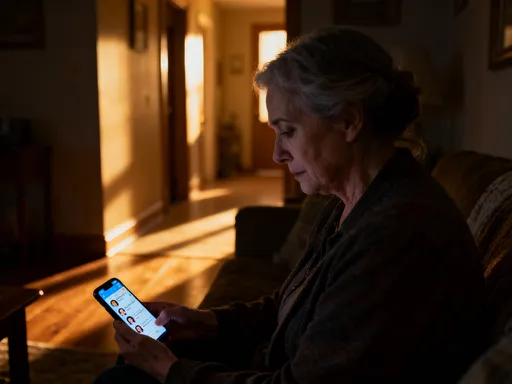
From Silent Scrolling to Meaningful Connection: How Nighttime Online Habits Transformed My Voice
Have you ever laid in bed, phone in hand, endlessly scrolling without really saying anything? I used to feel heard only when I shouted—until I changed how I used online communities at night. What started as mindless browsing became a quiet space for reflection, expression, and real connection. This is how I learned to speak with more confidence, clarity, and heart—simply by shifting my habits after dark. It wasn’t about posting more. It was about showing up differently. And what surprised me most? The smallest words, spoken softly and honestly, ended up making the biggest difference—not just in how others saw me, but in how I saw myself.
The Bedtime Scroll Trap: When Quiet Time Becomes Noise
It starts so gently. The kids are finally asleep. The kitchen is clean. The house is still. You sink into bed, phone in hand, ready to unwind. A quick check of your favorite online group—just to see what’s new. One post leads to another. A recipe, a laugh, a story that tugs at your heart. But before you know it, 45 minutes have slipped away. You haven’t commented. Haven’t shared. Haven’t really said anything at all. And when you finally put the phone down, you don’t feel rested. You feel… emptier. Like you’ve consumed a full meal but still can’t name what you ate.
This is the bedtime scroll trap—so many of us fall into it without even realizing. We turn to online communities at night because we’re seeking comfort, connection, a sense of belonging. But too often, we end up in passive mode: liking, reading, absorbing—but never contributing. We scroll through stories of others’ wins and worries, comparing our quiet struggles to their polished posts. We see someone share about feeling overwhelmed, and we think, Yes, that’s me, but we don’t type it. We’re too tired. Too unsure. Too afraid our words won’t matter.
And here’s the irony: the very spaces designed to bring us closer can leave us feeling more alone. We’re surrounded by voices, but we’re not adding ours. We’re listening, but we’re not being heard. The silence we carry into the night doesn’t get lighter—it gets heavier. But what if that time didn’t have to be about noise and consumption? What if, instead, it could become a sacred pause? A chance not just to take in the world, but to gently offer a piece of ourselves back to it?
Why We Stay Quiet: The Hidden Barriers to Expression
Let’s be honest—why don’t we speak up? It’s not that we don’t have anything to say. It’s that saying it feels risky. Especially at night, when our energy is low and our emotions run high, the barriers to expression can feel overwhelming. There’s the fear of judgment: Will people think I’m complaining? Will they misunderstand me? Will they think I’m not doing enough? There’s perfectionism: If I’m going to say something, it has to be wise, helpful, perfectly worded. And there’s sheer exhaustion: I don’t have the energy to explain how I really feel.
I used to believe that to contribute, I had to have the right answer. That my post had to be inspiring or insightful or at least entertaining. I’d start typing a comment—“I’ve been struggling with this too”—then delete it. Too messy. Too raw. Too much. I wanted to be the woman with the perfect solution, not the one admitting she was still figuring it out. But here’s what I’ve learned: no one is waiting for your perfect words. They’re waiting for your real ones.
The truth is, nighttime can actually be the best time to share—because we’re less performative. We’re not trying to impress. We’re not crafting a highlight reel. We’re just… tired and honest. And that honesty? That’s where connection lives. When we let go of the need to sound smart or strong or together, we create space for others to do the same. The barrier isn’t really the fear of speaking—it’s the mistaken belief that our voice has to be polished to be valuable. But a whisper can be powerful. A single sentence, typed with trembling fingers, can be an act of courage.
Small Words, Big Impact: Rediscovering the Power of a Single Comment
I’ll never forget the first time I broke my silence. I was reading a post in a parenting group. A mom had written, Some days I feel like I’m failing my kids. Like I’m just going through the motions. My chest tightened. That was me. Every day. But instead of just liking the post and moving on, I paused. And I typed: I feel that too. It helps to know I’m not alone. I almost didn’t hit send. It felt so small. So simple. But I did it anyway.
Within minutes, I got a reply: Thank you for saying that. I was scared to be the only one feeling this way. Then another: Me too. It means a lot that you spoke up. And just like that, I wasn’t just a spectator anymore. I was part of the conversation. That tiny comment—five words, really—had opened a door. It didn’t solve anything. But it created connection. And that connection? It gave me a little more strength to face the next day.
That’s when I realized: expression isn’t about eloquence. It’s about effort. You don’t need a long story or a clever take. You just need to show up as you are. A simple I’ve been there, a This resonates, a Thank you for sharing this—these aren’t small. They’re lifelines. And when you start sharing them, something shifts. You begin to trust your voice. You realize that your presence matters. And over time, those small words build something bigger: confidence. Not the loud, flashy kind—but the quiet, steady kind that says, My thoughts are worth sharing. My feelings are valid. I belong here.
Tools That Gently Encourage Expression
Not all technology is created equal when it comes to meaningful connection. Some apps are built for speed, for likes, for endless scrolling. But others? They’re designed with a little more care—tools that don’t demand your attention, but gently invite your voice. And honestly, some of the most helpful features aren’t flashy at all. They’re quiet helpers, working in the background to make it easier to say what’s on your mind.
Take draft-saving, for example. How many times have you started typing a comment, then stopped because you weren’t sure how to finish it? Maybe you were interrupted, or your thoughts felt too messy. But with draft-saving, you don’t have to lose that moment. You can walk away, come back later, and pick up where you left off. It’s like giving yourself permission to be unfinished. And that small feature? It’s lowered the pressure for me every time I’ve wanted to share something vulnerable.
Then there are tone suggestions—some platforms now gently flag if your message might come across as harsh, even if you didn’t mean it that way. I used to worry about sounding angry or critical, especially when I was tired. But seeing a soft nudge like, This might sound a bit strong—want to adjust? has helped me pause and rephrase. It’s not about censoring myself. It’s about communicating with more kindness—toward others, and toward myself.
And let’s not forget voice-to-text. On nights when my hands are too tired to type but my heart is full, I’ve recorded my thoughts instead. Speaking them out loud feels more natural, more honest. And then—boom—I’ve got a message ready to send. These tools don’t replace courage. But they make it easier to act on it. They meet us where we are: tired, tender, and trying our best.
Building a Nightly Ritual of Reflection and Sharing
Here’s the thing about change: it doesn’t happen all at once. I didn’t go from silent scroller to confident contributor overnight. What helped me was creating a simple, repeatable ritual—one that turned my nighttime online time into something intentional, not accidental.
It starts with a pause. Before I open any app, I take three slow breaths. Just that. It signals to my body: this isn’t mindless scrolling. This is a moment to check in. Then, I reflect. I ask myself: What’s one thing I noticed today? One feeling I haven’t shared? One thing I’m grateful for? Sometimes I write these thoughts in a notes app, just for me. Other times, I keep them in my head. But that act of reflection—of turning inward—makes all the difference.
Next comes the write step. I take one thought and turn it into a sentence. Just one. It doesn’t have to be profound. It could be, Today was hard, but I showed up, or I laughed at something my kid said, and it made my whole day brighter. The key is to keep it real, not impressive. Then, the final step: share or save. If it feels right, I post it in a community. If not, I save it. Either way, I’ve honored my experience.
This four-step practice—pause, reflect, write, share (or save)—has become my anchor. It’s not about posting every night. It’s about creating space to process. And over time, that space has become a sanctuary. I’m not just consuming stories anymore. I’m adding mine. And that shift—from passive to present—has changed how I see myself. I’m not just living my life. I’m noticing it. And that makes all the difference.
From Me to We: How Personal Words Spark Collective Support
One of the most beautiful surprises of speaking up has been discovering how personal stories create shared healing. I used to think my struggles were too ordinary to share. Everyone feels this way, right? Why add to the noise? But the truth is, when we name our quiet battles, we give others permission to do the same.
I remember posting once about how I’d cried in the grocery store parking lot after a long day. Nothing dramatic—just exhaustion and a flat tire and a cart full of groceries I didn’t have the energy to carry in. I almost didn’t share it. It felt silly. But I did. And the responses? They poured in. I’ve cried in parking lots too. Thank you for saying this. I thought I was the only one who felt broken by small things.
In that moment, my shame turned into solidarity. My isolation turned into connection. And that’s the magic of authentic sharing: it doesn’t just help you. It helps others feel less alone. Your words become a mirror. They say, You’re not weird for feeling this. You’re human. And when we do this—when we share our real, unfiltered moments—we don’t just build community. We heal it. We create spaces where people don’t have to perform. Where they can say, Me too, and feel seen. That’s the ripple effect of one voice choosing to speak.
Sleeping Lighter: The Emotional Relief of Being Heard
Here’s what I didn’t expect: the better I got at expressing myself online at night, the better I slept. Not because I was getting less screen time—sometimes, I was on my phone just as long. But the quality of that time had changed. Instead of ending the day with a swirl of other people’s lives in my head, I was ending it with a sense of closure. I’d said what I needed to say. I’d been seen. And that made it easier to let go.
There’s something deeply soothing about being heard. When we carry our thoughts in silence, they grow heavier. They loop in our minds, keeping us awake. But when we share them—when we put them into words and send them out into the world—something shifts. They don’t disappear, but they lose their grip. They become part of a conversation, not a burden. And that lightness? It follows us into sleep.
Now, when I put my phone down at night, I don’t feel drained. I feel settled. Like I’ve done a small but meaningful thing—not just for others, but for myself. I’ve honored my truth. I’ve added my voice to the chorus. And in doing so, I’ve reminded myself that I matter. That my story matters. That I’m not just scrolling through life—I’m living it, noticing it, sharing it.
This journey hasn’t been about becoming more social or more active online. It’s been about becoming more myself. It’s about using technology not to escape my life, but to engage with it more deeply. To connect, not just consume. To speak, not just scroll. And in those quiet nighttime moments, when the house is still and the world is soft, I’ve found a new kind of strength—one word, one comment, one honest sentence at a time.