From Endless Edits to Effortless Stories: How Video Tools Gave Me My Evenings Back
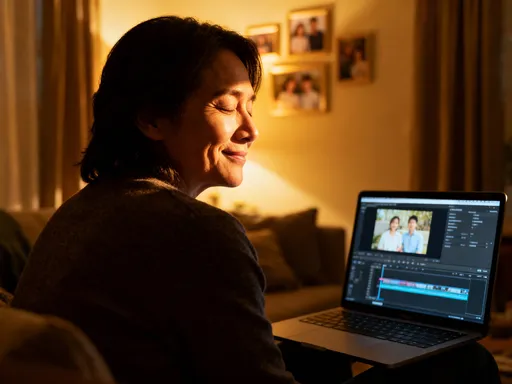
You know that feeling—your kids are asleep, dinner’s cleaned up, and finally, it’s your time. But instead of relaxing with a book or enjoying a quiet cup of tea, you’re hunched over your laptop, wrestling with clunky video edits of last weekend’s family trip. The music doesn’t sync, the clips are out of order, and your computer keeps freezing. What should be joyful memories turn into stress. I was there too—until I discovered how simple video tools could transform not just my videos, but my evenings, my energy, and my connection with the people I love. It wasn’t about becoming a filmmaker. It was about getting my life back.
The Hidden Cost of Capturing Memories
Like so many of us, I’ve always wanted to keep the beautiful, fleeting moments of family life close. The first time my daughter rode her bike without training wheels. The way my son laughed so hard at the dinner table that milk came out of his nose. The quiet morning when my husband made pancakes while wearing that silly apron I bought him years ago. These are the things I never want to forget. And so, like most parents in this digital age, I started recording everything—birthdays, holidays, school events, even ordinary Sunday mornings. My phone filled up with clips, my cloud storage overflowed, and my intention was pure: I wanted to remember.
But somewhere along the way, the joy of capturing moments turned into a kind of quiet guilt. I’d come home from a long weekend at the lake, tired but happy, only to feel a small knot in my stomach when I thought about the ten unedited clips sitting in my camera roll. I told myself I’d get to them “soon.” But soon never came. Life kept moving—laundry, school projects, work deadlines, doctor appointments. And those videos? They stayed unwatched, unshared, stuck in digital limbo. I’d open the editing app, try to piece together a short montage, and within ten minutes, I’d give up. Too many options. Too much confusion. Too little time.
And that’s when it hit me: I wasn’t preserving memories. I was avoiding them. The very thing I thought would help me hold onto life’s sweetness was actually making me feel more overwhelmed. I’d miss out on being fully present during events because I was so focused on getting the perfect shot. I’d spend hours behind the screen later, trying to fix it, only to fail. The camera, which was supposed to connect me to my family’s story, had become a source of stress. I wasn’t honoring our moments—I was burying them under good intentions and bad software.
Why Most Video Editing Feels Like a Part-Time Job
Let’s be honest—traditional video editing tools were not made for people like us. They were built for film students, content creators, or professionals with time, training, and powerful computers. When I first tried to edit a video of my son’s kindergarten graduation, I thought, “How hard could it be?” I downloaded a popular desktop program, watched a 20-minute tutorial, and confidently opened my project. Within minutes, I was lost in a sea of timelines, layers, and rendering queues. I didn’t know what “keyframing” meant. I didn’t understand why my audio kept desyncing. And every time I added a transition, the program froze.
My laptop, which had served me well for emails and online shopping, couldn’t handle the strain. I’d wait five minutes just to preview a 30-second clip. I’d lose my progress because the app crashed. I’d forget to save, or save in the wrong format, and then spend even more time fixing it. What should have taken 30 minutes turned into three hours of frustration. And for what? A two-minute video that still looked awkward and didn’t capture the emotion I felt when I was there.
And I wasn’t alone. I remember talking to a friend at a school pickup line. “I have all these clips of my mom’s 70th birthday,” she said, “but I can’t figure out how to make them into something nice. I don’t want to send her a jumbled mess.” Another mom admitted she hadn’t shared a single video from their summer vacation because “it just feels like too much work.” We weren’t lazy. We weren’t ungrateful. We were just using tools that weren’t designed for real life. They assumed we had time to learn, patience to troubleshoot, and energy to perfect. But real life doesn’t work that way. We need tools that work for us—not the other way around.
The Shift: When Editing Became a Moment, Not a Task
Everything changed when I stopped trying to be a pro and started looking for tools that respected my time. I stumbled upon a simple video app—something I’d seen in a quick ad but had ignored for months. This time, I gave it a try. I uploaded a few clips from a recent family picnic: my daughter chasing bubbles, my son building a sandcastle, my husband tossing a frisbee with the dog. I tapped “Create Story,” and within seconds, the app arranged the clips in a smooth sequence, added soft background music, and included gentle transitions. It even suggested a title: “A Perfect Afternoon.”
I couldn’t believe it. It looked… nice. Not perfect, but warm. Human. Emotional. And it took less than five minutes. I didn’t have to drag anything on a timeline. I didn’t have to worry about aspect ratios or export settings. I just tapped, watched, and shared. That night, I sent it to my parents. My mom called me in tears. “It felt like I was there,” she said. “I haven’t seen the kids in months, and this… this brought them to me.”
That moment was a turning point. I realized I didn’t need to master complex software to share what mattered. I just needed a tool that understood my life. Soon, I started using it for small things—a 30-second clip of my daughter’s school play, a quick montage of our morning walk in the rain. Each time, it got easier. I made a surprise anniversary video for my husband while waiting for pasta to boil. I added old photos, picked a song he loved, and let the app do the rest. When I played it for him, he was quiet for a long moment. Then he hugged me and said, “You remembered all of it.” I hadn’t spent hours. I’d spent 18 minutes. But the feeling? It was priceless.
How Smart Tools Support Real Life, Not Just Content
What I love most about these new tools isn’t the speed—it’s the peace they bring. The best technology doesn’t shout for attention. It works quietly in the background, like a good helper. These apps use smart features that reduce mental load without making you feel like you’re “cheating.” Auto-captions, for example, are a game-changer. I have an elderly aunt who’s hard of hearing. Before, I’d avoid sending videos because I knew she’d miss the dialogue. Now, with one tap, the app adds clean, easy-to-read captions. I sent her a clip of my son singing “Happy Birthday” to his grandma, and she texted me: “I could hear every word. Thank you for thinking of me.”
Smart trimming is another small miracle. The app can detect the best moments in a long clip—like when a child’s face lights up or when everyone laughs at the same time—and automatically cut to those seconds. No more scrolling through minutes of footage to find the golden moment. Cloud syncing means I can start a project on my phone during my commute, finish it on my tablet at home, and share it from anywhere. I don’t have to worry about losing files or running out of storage. It just works.
And here’s the thing: I’m not just sharing videos. I’m sharing connection. When my sister’s baby was born, I made a short video of our kids drawing pictures and saying hello. She played it for the newborn every night. “It’s the first voice he hears from outside our home,” she told me. That’s not content. That’s love. These tools don’t make me a better editor—they make me a more present daughter, sister, wife, and mom. They help me show up, even when I can’t be there in person.
Building Rituals, Not Just Videos
What started as a way to save time has become a meaningful part of our family rhythm. Every Sunday evening, after homework is done and before the week begins again, we have a little tradition: “Family Reel Night.” We gather on the couch, I pull up the video app, and we go through the week’s clips. The kids choose their favorites—the soccer goal, the funny face at breakfast, the dog stealing a sandwich. We add music, maybe a silly filter, and create a short montage together. Sometimes we watch it right away. Other times, we save it to a shared album.
This simple habit has done more than organize our memories. It’s brought us closer. My daughter talks about her week while picking clips. My son laughs at himself and wants to rewatch his moments. We talk, we connect, we remember. It’s not screen time that pulls us apart—it’s screen time that brings us together. And because the tool is so easy, I’m not the only one creating. The kids can make their own videos now. My daughter made a “Day in My Life” clip for her teacher. My son sent a thank-you video to his coach after a game. They’re learning to tell their own stories—and that feels powerful.
I’ve also started using these tools for everyday gratitude. On tough days, I’ll make a quick 60-second video of small joys: sunlight through the kitchen window, a text from a friend, my husband’s hand on my shoulder. I don’t share them. I just save them. But having them there—organized, peaceful, beautiful—helps me remember that even on hard days, there is light. Technology, in this small way, is helping me practice mindfulness, not distraction.
Finding Balance: Less Screen Time, More Real Time
Here’s a truth I didn’t expect: the right tech can actually help you spend less time on screens. It sounds backwards, but it’s true. Before, I’d spend hours editing, feeling guilty that I wasn’t with my family. Now, I finish a video in ten minutes and put my phone down. I’m not chained to my laptop at midnight. I’m not stressed about unfinished projects. I’m free.
That freedom gives me space—for walks, for reading, for sitting with my kids and just listening. I used to think that capturing memories meant more screen time. Now I see it can mean the opposite. When the process is simple, it doesn’t steal from life. It honors it. I’m more present during events because I’m not worried about getting every shot perfect. I know I can always pull together a nice clip later, quickly. And because I actually finish and share videos now, I feel lighter. The guilt is gone.
I also use these tools to protect quiet time. On weekends, I might record a few moments, but I don’t touch them until after dinner. Then, while the family plays a board game, I spend ten minutes making a short reel. It’s my calm moment, not a burden. I’m not missing out. I’m participating, then reflecting. And when I share it, I’m not just showing a memory—I’m inviting others into it. My sister says she feels like she’s part of our week when she gets a video. That’s connection. That’s what matters.
Your Life, Your Story—Simplified
Looking back, I realize that my struggle with video editing was never really about the technology. It was about time. It was about energy. It was about wanting to hold onto love without losing myself in the process. I didn’t need more features. I didn’t need to learn a new skill. I needed a tool that respected my life as it is—busy, beautiful, imperfect.
Today, I no longer see video editing as a chore. It’s a way to pause, reflect, and share. It’s a way to say, “This moment mattered.” And because the tools are so simple, I do it more often. I’m not waiting for the “perfect” time. I’m not saving it for “someday.” I’m doing it now, in the quiet of a Tuesday evening or the chaos of a school morning.
And in doing so, I’ve gained something unexpected: peace. I’m less stressed. More connected. More present. My evenings are no longer consumed by digital clutter. I have time to breathe, to be with my family, to be myself. The videos I make aren’t cinematic masterpieces. But they’re real. They’re ours. And that’s enough.
So if you’re sitting on a mountain of unedited clips, feeling that familiar tug of guilt, I want to tell you this: you don’t have to do it the hard way. You don’t have to be a pro. You don’t have to spend hours. There are tools now that understand life, not just technology. They’re designed for moments, not minutes. For love, not likes. Let them help you. Let them give you your evenings back. Because your story is worth telling—and you deserve to live it, not just record it.